Is Naan Healthy? What You Need to Know About This Popular Indian Bread
 Nov, 28 2025
Naan Nutrition Calculator
Results
Naan is everywhere - from cozy family dinners to fancy Indian restaurants. It’s soft, buttery, and perfect for scooping up curry. But if you’re watching what you eat, you might be asking: is naan healthy? The answer isn’t simple. It depends on how it’s made, what’s in it, and how often you eat it.
What’s Actually in Naan?
Traditional naan starts with flour, water, yeast, salt, and sometimes yogurt or milk. That sounds harmless, right? But most restaurant and store-bought naan adds butter, ghee, or oil - sometimes generously. A single piece of plain naan from a restaurant can have 200-300 calories. Add a tablespoon of butter on top, and you’re looking at 400 calories before you even touch the curry.
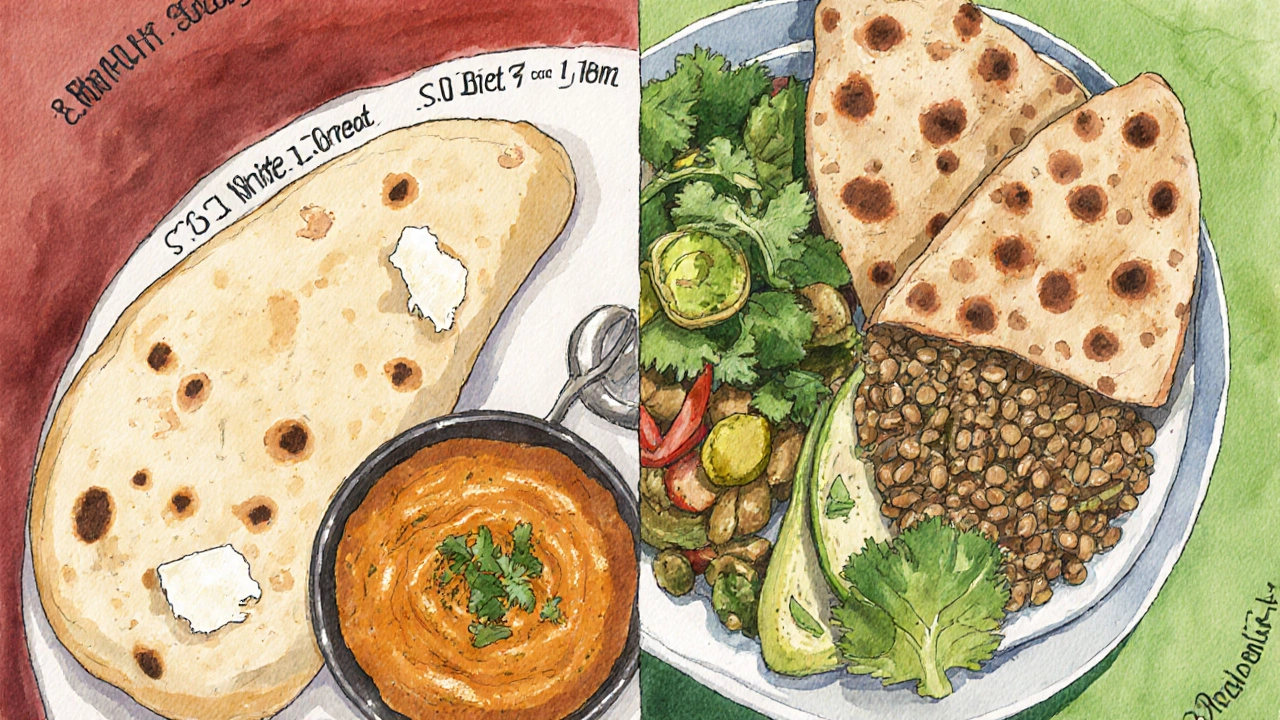
The flour matters too. Most naan is made with refined white flour, which gets stripped of fiber and nutrients during processing. That means it digests fast, spikes your blood sugar, and leaves you hungry again soon after. Compare that to whole wheat roti, which has about 3 grams of fiber per piece. A typical naan? Less than 1 gram.
Naan vs Roti: The Real Difference
If you’re trying to eat healthier, comparing naan to roti is like comparing a sugary cereal to oatmeal. Roti is usually made with whole wheat flour, water, and salt. It’s baked on a flat griddle, not in a tandoor with butter. One medium roti has around 70-80 calories and 3-4 grams of fiber.
Naan, on the other hand, is enriched. The yeast and dairy make it rise and soften, but they also add fat and carbs. A 2023 study from the National Institute of Nutrition in Hyderabad found that people who swapped white flour naan for whole wheat roti daily lowered their post-meal blood sugar spikes by 32% over six weeks. That’s not a small change - it’s a real benefit for people managing weight or prediabetes.
Can You Make Naan Healthy?
Yes - and it’s easier than you think. Here’s how to turn naan into something that fits into a healthy diet:
- Use whole wheat flour - Swap refined flour for 100% whole wheat. It adds fiber, B vitamins, and slows digestion.
- Reduce or skip the butter - Brush with olive oil instead, or skip it entirely. You won’t miss the richness if the naan is fresh and warm.
- Add seeds or oats - Mix in a tablespoon of flaxseed, chia, or rolled oats into the dough. It boosts fiber and omega-3s.
- Make it thinner - Thinner naan means fewer calories. Aim for 6-7 inches wide instead of 8-9.
- Bake it, don’t fry it - Use a cast iron skillet or baking stone. No need for deep frying or heavy oil.
Homemade whole wheat naan with a sprinkle of sesame seeds can have under 150 calories and 4 grams of fiber per piece. That’s almost as good as roti - but still has that soft, pillowy texture you love.
When Is Naan Actually Okay to Eat?
There’s no need to ban naan completely. It’s not the enemy. Think of it like rice or pasta - it’s a carb, and carbs aren’t bad. It’s about context.
If you’re active - say, you work out 4-5 times a week or have a physically demanding job - a piece of naan with your dal and sabzi is perfectly fine. It gives you energy. If you’re mostly sitting at a desk, eating two pieces every night? That’s where the problem starts.
Also, consider what you’re eating it with. Naan dipped in a creamy korma or butter chicken adds saturated fat on top of refined carbs. But naan with grilled paneer, roasted vegetables, or a lentil curry? That’s a balanced plate. The fiber from the veggies and protein from the dal slow down the digestion of the naan, keeping blood sugar steady.
What About Store-Bought Naan?
Most packaged naan from the grocery store is loaded with preservatives, hydrogenated oils, and added sugars. Check the label. If you see “hydrogenated vegetable oil,” “high fructose corn syrup,” or “modified starch,” walk away. Even if it says “whole wheat,” it might be mostly refined flour with a dash of whole wheat.
Look for brands that list only: whole wheat flour, water, yeast, salt, and maybe yogurt or milk. If it has more than five ingredients, it’s probably not worth it. A few good options in Mumbai supermarkets include Shreeji Whole Wheat Naan and Everest Organic Naan - both use no added oils or preservatives.
How Often Should You Eat Naan?
There’s no magic number. But here’s a simple rule from nutritionists in Pune: if you’re eating naan daily, limit it to one piece. If you’re trying to lose weight or manage blood sugar, eat it only 2-3 times a week. On other days, switch to roti, jowar bhakri, or brown rice.
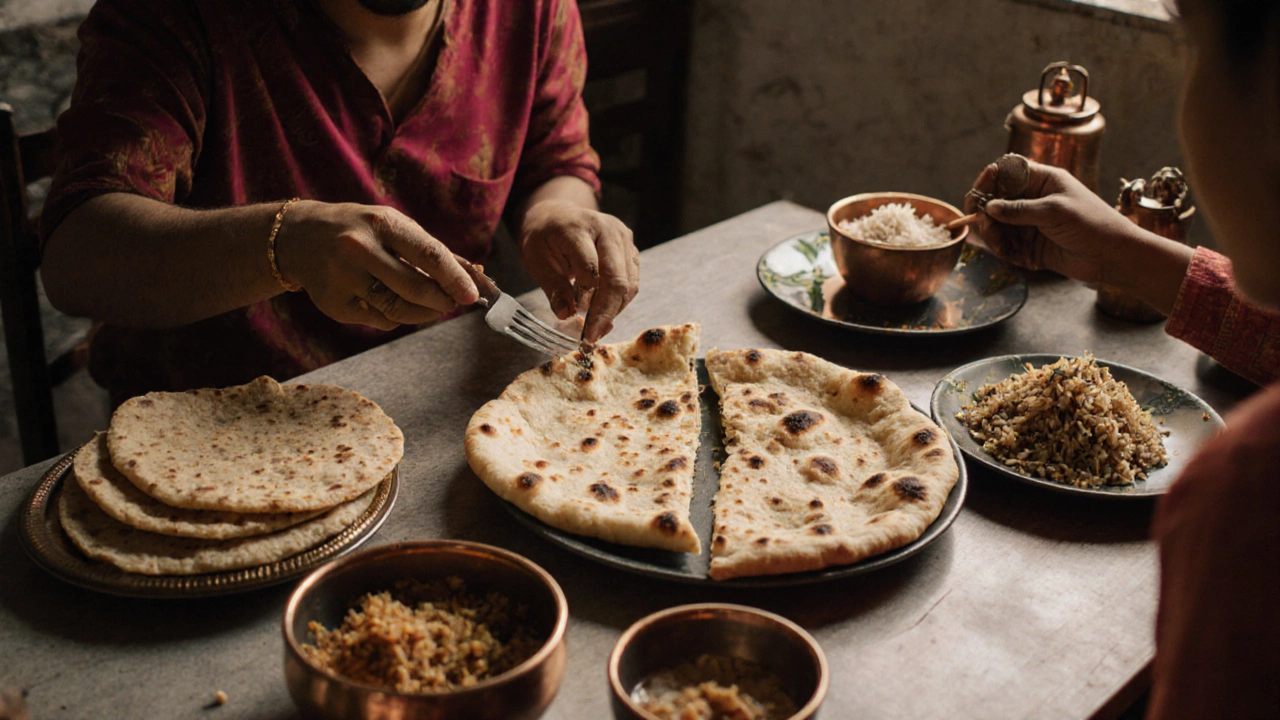
Also, pay attention to portion size. One naan is often two servings. Cut it in half. Share it. That’s a habit many families in South Mumbai follow - they serve one naan between two people.
Naan in Indian Diets: A Cultural Lens
In North India, naan is part of daily life. In the South, it’s mostly for special occasions. That’s not just tradition - it’s practical. Southern diets rely more on rice, millets, and lentils, which are naturally lower in calories and higher in fiber. Northern diets, with their tandoori breads and dairy-rich gravies, are higher in carbs and fat.
That doesn’t mean one is better. It means balance matters. If you grew up eating naan every day, you don’t have to quit. Just make it better. Use whole grain. Skip the butter. Eat less. Pair it with veggies and protein. That’s how tradition evolves - without losing its soul.
Bottom Line: Is Naan Healthy?
Naan isn’t a health food. But it’s not a villain either. Refined flour, butter, and oil make it calorie-dense and low in fiber. But if you make it at home with whole wheat, skip the extra fat, and eat it in moderation, it can fit into a healthy diet. It’s not about banning naan - it’s about making smarter choices.
Try this: Next time you order naan, ask for it without butter. Or better yet, make a batch at home with whole wheat flour and flaxseeds. You’ll still get that warm, chewy texture - just with fewer regrets.
Is naan better than roti for weight loss?
No, roti is generally better for weight loss. A typical roti has 70-80 calories and 3-4 grams of fiber, while a standard naan has 200-300 calories and less than 1 gram of fiber. Whole wheat naan can come closer, but unless you make it yourself with no added fat, roti is the smarter choice for cutting calories and staying full longer.
Can diabetics eat naan?
Yes, but with caution. Refined flour naan causes rapid blood sugar spikes. Diabetics should choose whole wheat naan, limit it to one small piece per meal, and always pair it with protein (like dal or paneer) and fiber-rich vegetables. Avoid butter or ghee on top. Monitoring blood sugar after eating naan can help you understand your personal tolerance.
Does naan have gluten?
Yes, traditional naan contains gluten because it’s made from wheat flour. If you have celiac disease or gluten sensitivity, avoid regular naan. Look for gluten-free alternatives made with rice flour, chickpea flour, or almond flour - though they won’t taste exactly the same.
Is naan high in carbs?
Yes. One piece of naan has about 30-45 grams of carbohydrates, mostly from refined flour. That’s similar to two slices of white bread. If you’re watching your carb intake, opt for smaller portions or swap it for lower-carb options like millet roti or cauliflower rice.
Why is naan so soft compared to roti?
Naan gets its softness from yeast, dairy (yogurt or milk), and often butter or ghee. These ingredients help it rise and stay tender. Roti is made without yeast or dairy, so it’s flatter and chewier. The yeast creates air pockets, and the fat coats the flour, preventing gluten from tightening - that’s why naan feels pillowy.
What to Eat Instead of Naan
If you want to cut back on naan, here are five healthy swaps that still feel satisfying:
- Whole wheat roti - The easiest swap. Same texture, better nutrition.
- Jowar bhakri - Made from sorghum flour, high in fiber and iron. Popular in Maharashtra.
- Bajra roti - Millet-based, great for winter. Keeps you full longer.
- Quinoa or brown rice cakes - For a change of texture. Crunchy and filling.
- Vegetable wraps - Use large lettuce or spinach leaves to hold your curry. Low-carb, high-nutrient.
These aren’t just alternatives - they’re upgrades. And they still let you enjoy the flavors of Indian food without the guilt.