Mysore Pak: The Sweet Legend of Karnataka's Iconic Dessert
When you think of Mysore pak, a dense, golden Indian sweet made from gram flour, sugar syrup, and ghee. It’s not just a dessert—it’s a legacy from the royal kitchens of Mysore, where chefs perfected the art of turning simple ingredients into something magical. Unlike other Indian sweets that rely on milk solids or nuts, Mysore pak gets its texture from the careful balance of gram flour, toasted chickpea flour that gives it structure and nutty depth, sugar syrup, boiled to the exact string consistency to avoid graininess, and ghee, clarified butter that makes it melt without being greasy. This trio is all it takes. No eggs. No dairy. No fancy tools. Just patience, heat, and a steady hand.
What makes Mysore pak different from jalebi or laddoo? It doesn’t fry. It doesn’t steam. It’s poured into a tray and left to set. The magic happens in the syrup’s temperature—too cool, and it’s sticky; too hot, and it turns brittle. The best versions come from old-school kitchens where the syrup is tested by dropping a bit into cold water, watching it form a soft ball. You’ll find it in temples in Karnataka, sold in paper cones, or served at weddings wrapped in foil. It’s the snack that doesn’t need a fork. You just break off a piece and let it dissolve on your tongue.
It’s also the dessert that fools you. Looks simple? It’s not. Get the syrup wrong, and you’ve got a sugar brick. Too much ghee, and it turns oily. Too little, and it crumbles. That’s why home cooks in South India guard their recipes like secrets. Some add a pinch of cardamom. Others use old ghee for deeper flavor. But the core? Always the same. And that’s why, even today, when you taste a perfect piece of Mysore pak, you’re tasting history.
Below, you’ll find real recipes, tips from home cooks, and fixes for the most common mistakes—like why your Mysore pak won’t set or turns grainy. No fluff. Just what works.
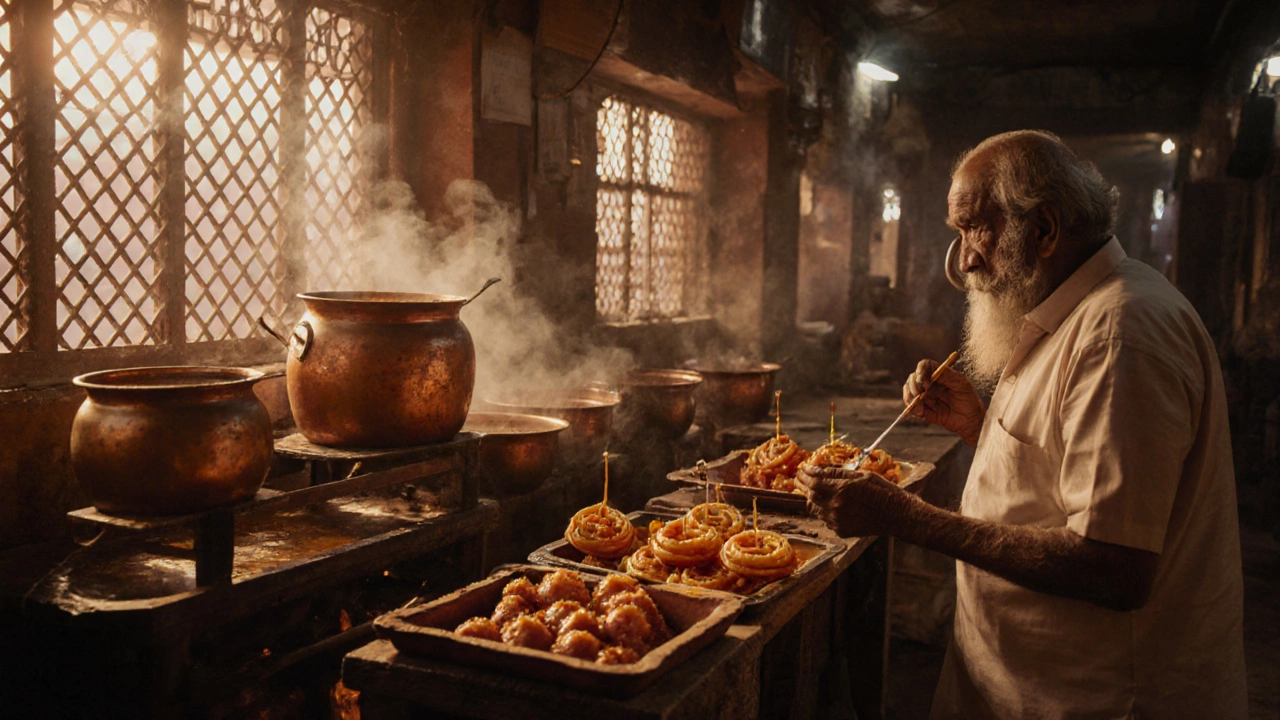
What Is India's Traditional Sweet? A Guide to the Most Beloved Indian Sweets
Discover India's most beloved traditional sweets like gulab jamun, rasgulla, and jalebi-how they're made, why they matter, and where to find the real ones.