What Is India's Traditional Sweet? A Guide to the Most Beloved Indian Sweets
 Oct, 27 2025
Ask anyone in India what their favorite sweet is, and you’ll get a dozen answers. But if you ask what’s India's traditional sweet, the real answer isn’t one dish-it’s a whole family of sweets, each with its own story, region, and ritual. These aren’t just desserts. They’re part of weddings, festivals, temple offerings, and Sunday morning treats. They’ve been passed down for generations, made in tiny kitchens and bustling sweet shops across villages and cities alike.
Why India Has So Many Traditional Sweets
India’s sweet tradition didn’t come from a single recipe book. It grew from what was available: milk, sugar, jaggery, nuts, and spices. In ancient times, ghee, milk solids, and jaggery were prized. Sugar was expensive, so sweets were often reserved for special days. Over centuries, trade brought new ingredients-rose water from Persia, cardamom from the Malabar Coast, saffron from Kashmir-and each region adapted them into their own version.
Unlike Western cakes or cookies, most Indian sweets are made from milk solids (khoya), flour, or rice, slow-cooked in syrup. They’re dense, rich, and meant to be savored slowly. You don’t eat them after every meal. You eat them when something matters-a birth, a festival, a return home.
The Top Five Traditional Indian Sweets
While hundreds exist, five stand out as truly national, recognized from Kashmir to Kanyakumari.
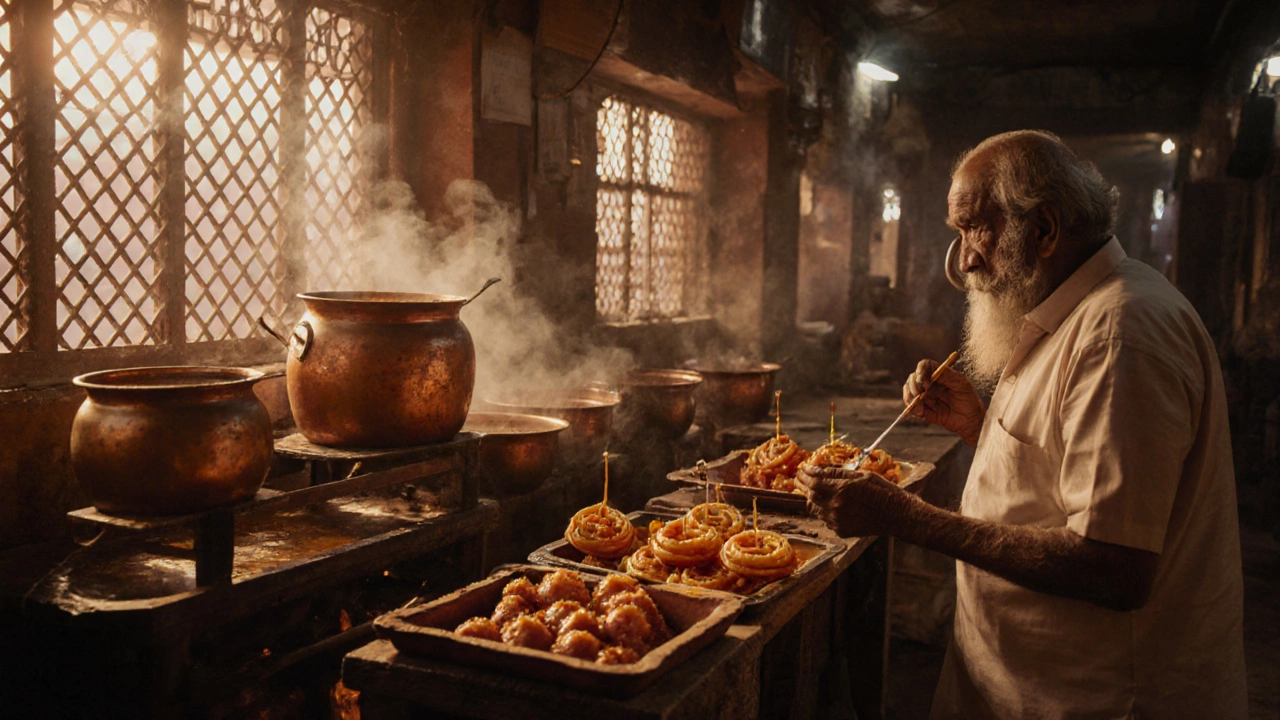
- Jalebi: Bright orange, spiral-shaped, soaked in sugar syrup. Made from fermented batter fried hot and dipped in syrup. Best eaten warm. In North India, it’s a breakfast treat with rabri. In the South, it’s called jilabi and served during Diwali.
- Gulab Jamun: Soft, spongy balls made from khoya or milk powder, fried until golden, then soaked in rose-scented syrup. The syrup should be thick enough to cling, not drown. Every family has a secret-some add cardamom, others a pinch of saffron.
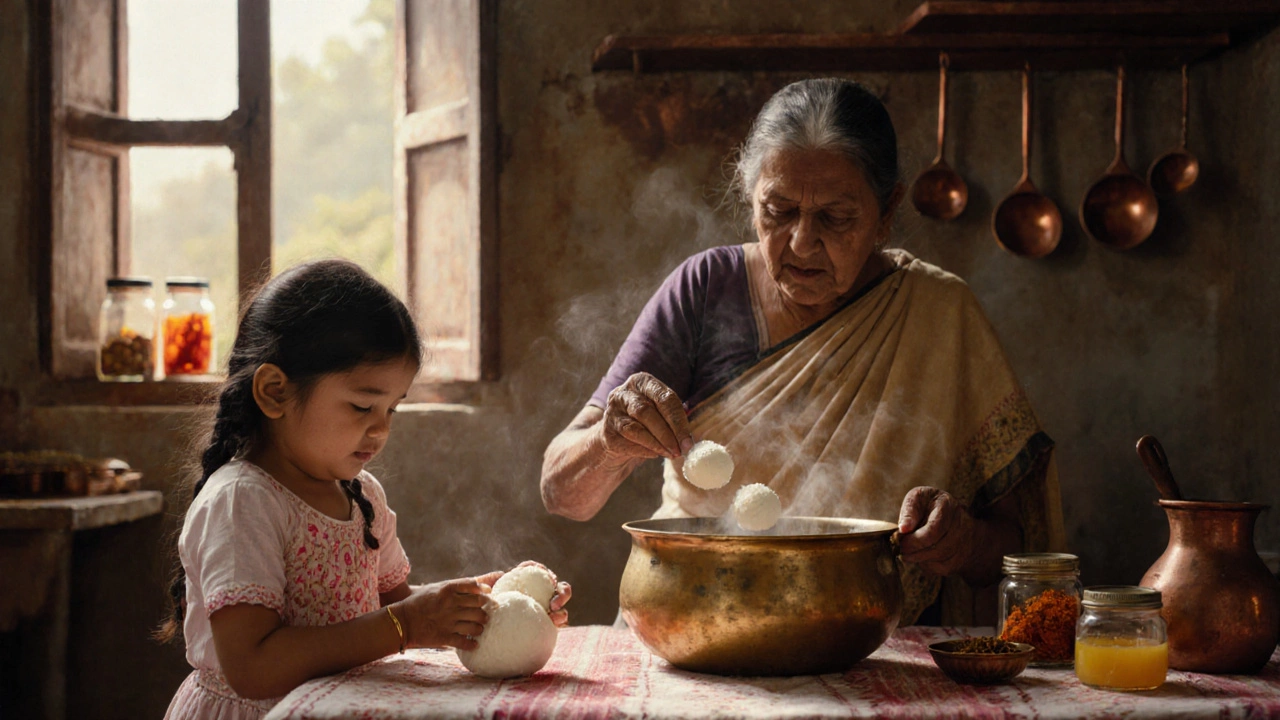
- Rasgulla: Originated in Odisha and West Bengal, these are spongy cheese balls cooked in light sugar syrup. They’re light, juicy, and melt in your mouth. The key? The chhena (cottage cheese) must be kneaded just right-not too soft, not too hard.
- Mysore Pak: From Karnataka, this is a buttery, golden-yellow sweet made from gram flour, ghee, and sugar. It’s dense, crumbly, and melts without being sticky. The secret? Using old ghee and cooking the sugar syrup to the right stage.
- Peda: Made from khoya, sugar, and cardamom, peda is shaped into small discs. Varanasi peda uses milk reduced for hours. Mathura peda is famous for its creamy texture. It’s often offered in temples and given as gifts during Diwali.
Regional Variations You Should Know
India’s size means no single sweet dominates everywhere. What’s common in one state might be unknown in another.
- In Gujarat, shankarpali-crispy, diamond-shaped sweets made with flour, sugar, and ghee-are a Diwali staple.
- In Maharashtra, modak is the sweet of Ganesh Chaturthi. Steamed or fried rice flour dumplings filled with coconut and jaggery.
- In Tamil Nadu, payasam (kheer) is served with rice and milk, flavored with cardamom and fried nuts.
- In Punjab, sooji halwa is a quick, comforting sweet made from semolina, ghee, and sugar, often eaten for breakfast.
- In Assam, chhena jalebi is a local twist-softer, less syrupy, with a hint of lemon.
What Makes a Sweet "Traditional"?
Not every sweet with sugar and milk counts. A traditional Indian sweet has three things:
- Handmade: Made with simple tools-wooden spoons, copper pots, cloth strainers. No mixers, no machines.
- Seasonal or ritual-based: Made for festivals, not daily snacks. Rasgulla for Durga Puja, laddoos for Ganesh Chaturthi, jalebi for Diwali.
- Local ingredients: Uses milk from nearby cows, jaggery from local sugarcane, spices from the region. No imported syrups or artificial flavors.
That’s why store-bought versions often fall short. They taste sweet, but they don’t carry the same meaning.
How These Sweets Are Made-The Real Process
Most traditional sweets rely on technique, not recipes. Here’s how it works in a typical home kitchen:
- Khoya: Milk is simmered for hours until it reduces to a thick paste. No shortcuts. You can’t fake the time.
- Syrup: Sugar and water are boiled to the right stage-thread, soft ball, or hard ball. You test it by dropping a spoonful in cold water. If it forms a soft ball, it’s right for gulab jamun.
- Frying: Oil must be hot but not smoking. Too cold, and the sweet absorbs oil. Too hot, and it burns outside and stays raw inside.
- Soaking: After frying, sweets are dipped in syrup while still hot. That’s how they absorb flavor without turning soggy.
Many home cooks still use copper pots because they heat evenly. Some still strain milk through muslin cloth to make chhena. These aren’t old-fashioned habits-they’re what make the taste different.
Modern Twists and What’s Lost
Today, you’ll find chocolate-covered gulab jamun, ice cream versions of rasgulla, and vegan peda made with almond milk. Some are clever. Others miss the point.
The real loss isn’t the taste-it’s the connection. When a child helps their grandmother knead chhena, they learn patience. When a family gathers to fry jalebi on Diwali morning, they’re not just making dessert-they’re keeping a memory alive.
Fast food and packaged sweets are convenient. But they don’t carry the same warmth. You can’t bottle tradition in a plastic container.

How to Taste a Traditional Indian Sweet the Right Way
If you’re trying one for the first time, don’t rush it.
- Look at it. Is it golden? Is the syrup clinging, not dripping?
- Smell it. Do you get rose, cardamom, or just sugar?
- Take a small bite. Let it melt. Notice the texture-creamy, chewy, crisp?
- Wait. The flavor doesn’t hit right away. It unfolds slowly, like a song.
And always eat it fresh. These sweets don’t keep well. That’s part of the tradition-they’re meant to be shared, not stored.
Where to Find the Real Deal
If you want the authentic experience, skip the supermarket aisle. Head to:
- Local sweet shops (mithaiwala) in old city markets-like Khari Baoli in Delhi or Laxmi Sweet Shop in Mumbai.
- Festival stalls during Diwali, Eid, or Pongal. That’s when the best sweets are made.
- Village fairs and temple canteens. These places still use the old methods.
Ask the shopkeeper: "Which one is your grandmother’s recipe?" That’s usually the one worth trying.
What is the most popular traditional Indian sweet?
There’s no single answer, but gulab jamun is the most widely recognized across India. It’s served at weddings, festivals, and even in restaurants abroad. However, in Bengal, rasgulla is king. In South India, mysore pak is more common. Popularity depends on region, not national ranking.
Are Indian traditional sweets healthy?
Not really-they’re high in sugar and fat. But they’re not meant to be daily food. Traditionally, they were eaten once a week or during festivals. The real benefit? They’re made with natural ingredients: milk, ghee, jaggery, nuts. No preservatives, no artificial colors. Compared to mass-produced candies, they’re cleaner, just not low-calorie.
Can I make Indian traditional sweets at home?
Yes, but it takes time and patience. Start with something simple like sooji halwa or basic laddoos. Avoid shortcuts like pre-made khoya. Real khoya takes hours to make. If you’re new, watch videos of home cooks in India-they show the exact texture you’re aiming for. Don’t rush the syrup stage. That’s where most beginners fail.
Why do Indian sweets use so much ghee?
Ghee is the traditional fat of choice because it has a high smoke point, adds rich flavor, and keeps sweets fresh longer. It’s also culturally significant-used in rituals, considered pure, and believed to aid digestion. Modern versions use oil or butter, but they lack the depth. Ghee isn’t just an ingredient-it’s part of the soul of the sweet.
Do Indian sweets contain dairy?
Almost all traditional Indian sweets are dairy-based. They’re made from milk, khoya, chhena, or paneer. Even jalebi often uses yogurt in the batter. Vegan versions exist now, but they’re modern adaptations. The original recipes rely on milk solids for texture and richness.
What to Try Next
If you’ve tasted just one Indian sweet, start with gulab jamun. It’s the gateway. Then try rasgulla for its lightness, and jalebi for the crunch and syrupy burst. After that, head to a local sweet shop and ask for something you’ve never heard of. That’s where the real tradition lives.