Raw Chicken in Curry: Safe Prep, Flavor Tips, and Common Mistakes
When you put raw chicken in curry, uncooked poultry added directly to a simmering spice blend. Also known as chicken curry base, it’s the foundation of countless Indian meals—from home kitchens in Punjab to street stalls in Hyderabad. But putting raw chicken into a curry isn’t just about tossing it in and waiting. Do it wrong, and you risk undercooked meat, uneven flavor, or even foodborne illness. Do it right, and you get tender, juicy chicken soaked in spices that cling to every bite.
Many people assume that because curry simmers for hours, the chicken will cook through no matter what. That’s a myth. Chicken needs to reach at least 165°F (74°C) to be safe, and if it’s added too late or in big chunks, the outside might look done while the inside stays raw. The key is timing and size. Cut chicken into even pieces—about 1 to 1.5 inches—and add it early enough so it cooks slowly with the onions, garlic, and spices. This lets the meat absorb flavor while reaching a safe temperature. Don’t rush it. A good curry takes time, and so does safe chicken.
Another big mistake? Washing raw chicken before cooking. It doesn’t remove bacteria—it spreads it. Water splashes germs onto your sink, counter, and utensils. The only thing that kills salmonella or campylobacter is heat. So skip the rinse. Just pat the chicken dry with paper towels, toss it in the pot, and let the curry do the work. Also, don’t skip the sear. Browning chicken in a little oil before adding liquid gives it depth. It’s not traditional in every region, but it’s a game-changer for flavor. Think of it like building a flavor base: onions first, then garlic and ginger, then chicken, then spices. Each layer adds something.
What about spices? In Indian cooking, spices aren’t just for taste—they help preserve and tenderize. Turmeric, cumin, coriander, and chili powder all have antimicrobial properties. That’s why many traditional recipes call for adding spices before the chicken. Let them toast for a minute in oil until fragrant. That’s when their oils unlock and start working. Don’t just dump them in at the end. And don’t forget the acid. A splash of lemon juice or yogurt at the end doesn’t just brighten the dish—it helps break down proteins, making the chicken even more tender.
Some folks worry about chicken drying out in curry. That usually happens when it’s overcooked or cooked on high heat the whole time. Keep the simmer gentle. If the curry is boiling hard, the chicken will get rubbery. A low, slow bubble is what you want. And if you’re making a creamy curry like butter chicken or korma, add the chicken after the cream or coconut milk goes in. High heat with dairy can cause curdling, and that’s not what you’re after.
Leftovers? Store them properly. Cooked chicken curry keeps for 3–4 days in the fridge. Freeze it if you’re not eating it soon. Never leave it out at room temperature for more than two hours. Bacteria grow fast between 40°F and 140°F. And when you reheat it, make sure it’s steaming hot all the way through. No lukewarm leftovers.
There’s a reason raw chicken in curry is so common across India: it’s affordable, filling, and deeply flavorful. But it’s also one of those things where small details make all the difference. It’s not magic. It’s technique. And once you get the basics down—proper cutting, no washing, good sear, gentle simmer—you’ll never go back to bland or risky chicken curry again.
Below, you’ll find real recipes, expert tips, and common pitfalls sorted by region, skill level, and cooking method. Whether you’re new to Indian cooking or just want to fix your chicken curry game, these posts have you covered.
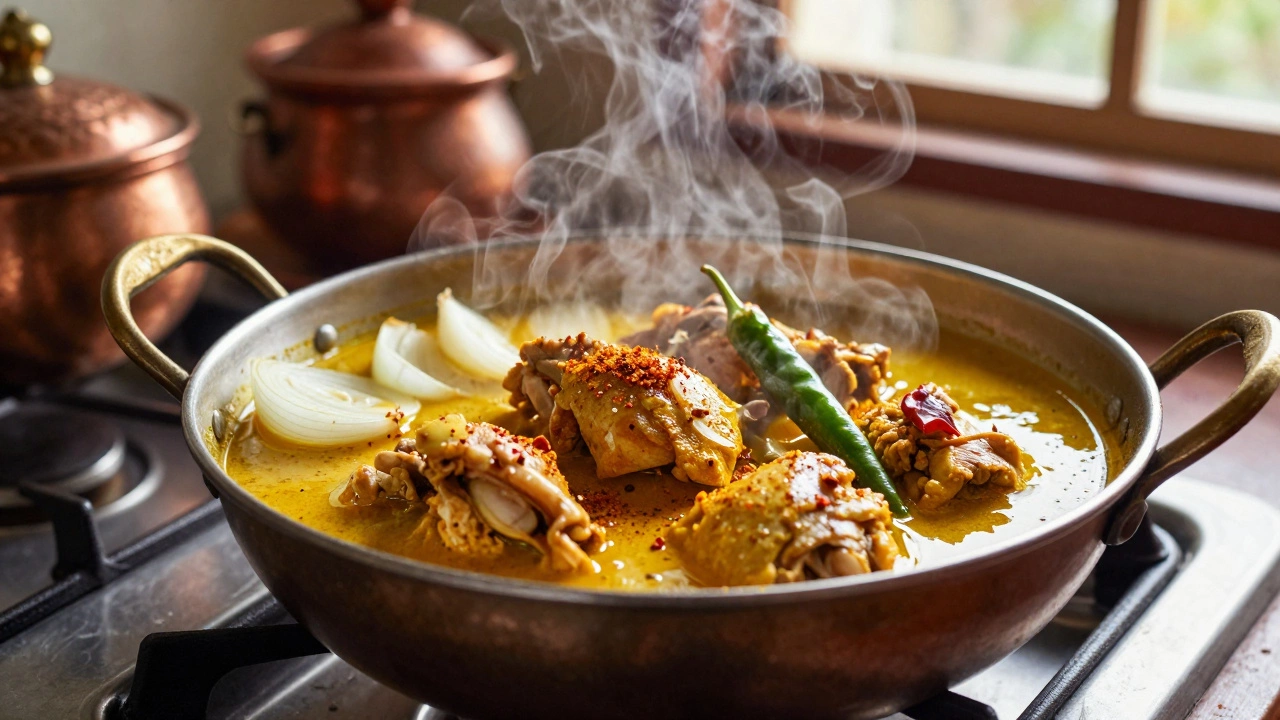
Can You Put Raw Chicken Into a Curry? Yes, Here's How to Do It Right
Yes, you can safely put raw chicken into a curry. Learn how to brown, simmer, and season it properly for tender, flavorful results every time-no pre-cooking needed.