Roti Calories with Ghee: How Many and Why It Matters
When you look at roti calories with ghee, the total energy you get from a ghee‑enriched Indian flatbread, you’re really measuring the blend of ghee, clarified butter that adds rich flavor and fat and roti, the unleavened wheat bread that’s a staple across India. The calories, units of energy that fuel your body in this combo depend on dough size, flour type, and how much ghee you melt in.
Understanding roti calories with ghee helps you keep meals balanced. If a single roti packs 120 kcal from the flour and another 45 kcal from a teaspoon of ghee, you’re looking at roughly 165 kcal per piece. For someone aiming at a 2,000 kcal daily target, that’s about 8 % of the total—a noticeable chunk when you add multiple breads to a meal.
Ghee isn’t just a calorie source; it brings saturated fat, cholesterol‑raising lipids, and fat‑soluble vitamins A, D, E, and K. One tablespoon delivers around 120 kcal and 14 g of fat, most of it saturated. Those fats give the roti a soft mouthfeel and a lingering aroma that plain whole‑wheat rotis lack. The trade‑off is a higher energy density, so you’ll want to watch portion size if heart health is a concern.
The roti itself is mostly complex carbs and a modest amount of protein. Using whole‑wheat flour adds fiber, which slows digestion and steadies blood sugar spikes. A 30‑gram dough ball before cooking typically yields about 90 kcal, but the exact number shifts with the addition of oat, millet, or chickpea flour, each bringing its own nutrient profile.
Size matters more than you think. A 6‑inch roti can be 30 g, whereas an 8‑inch one may reach 50 g, pushing calories up by a third. When you aim for a lighter plate, roll the dough thinner and keep the diameter moderate. The same amount of ghee then spreads over a larger surface, meaning each bite gets a bit less fat.
Cooking technique also tweaks the calorie count. A dry tawa roast with no added fat keeps the roti’s base calories low, while brushing the hot surface with ghee before or after cooking adds extra fat. Some cooks drizzle a few drops post‑cook to lock in moisture; that adds roughly 20 kcal per teaspoon. If you’re counting, measure the ghee with a teaspoon rather than eyeballing.
For those who love the buttery taste but want fewer calories, try substituting half the ghee with a light oil like mustard or soybean. The flavor remains while the saturated fat drops. Alternatively, use a spray bottle to mist the dough—this gives the same glossy finish with far fewer calories.
Switching up the flour can also reduce overall energy. Buckwheat or millet flours have slightly lower carbohydrate content per gram, and their distinct flavors pair nicely with a modest ghee smear. Adding a pinch of baking soda (as some roti recipes suggest) can make the bread puffier, letting you use less ghee to achieve the same softness.
Factors That Change Roti Calorie Count
Three key variables drive the final number: dough weight, ghee amount, and cooking style. A heavier dough means more carbs; more ghee means more fat; and a wet cooking surface adds hidden calories. By adjusting any of these, you can fine‑tune the balance between taste and nutrition.
When you pair the calorie knowledge with practical tips, you gain control over your meals. Below you’ll find articles on why roti sometimes won’t puff, how to add oil at the right stage for fluffier bread, and even a deep dive into whether naan belongs in the junk‑food category. Each piece builds on the basics covered here, helping you enjoy roti with ghee without the guesswork.
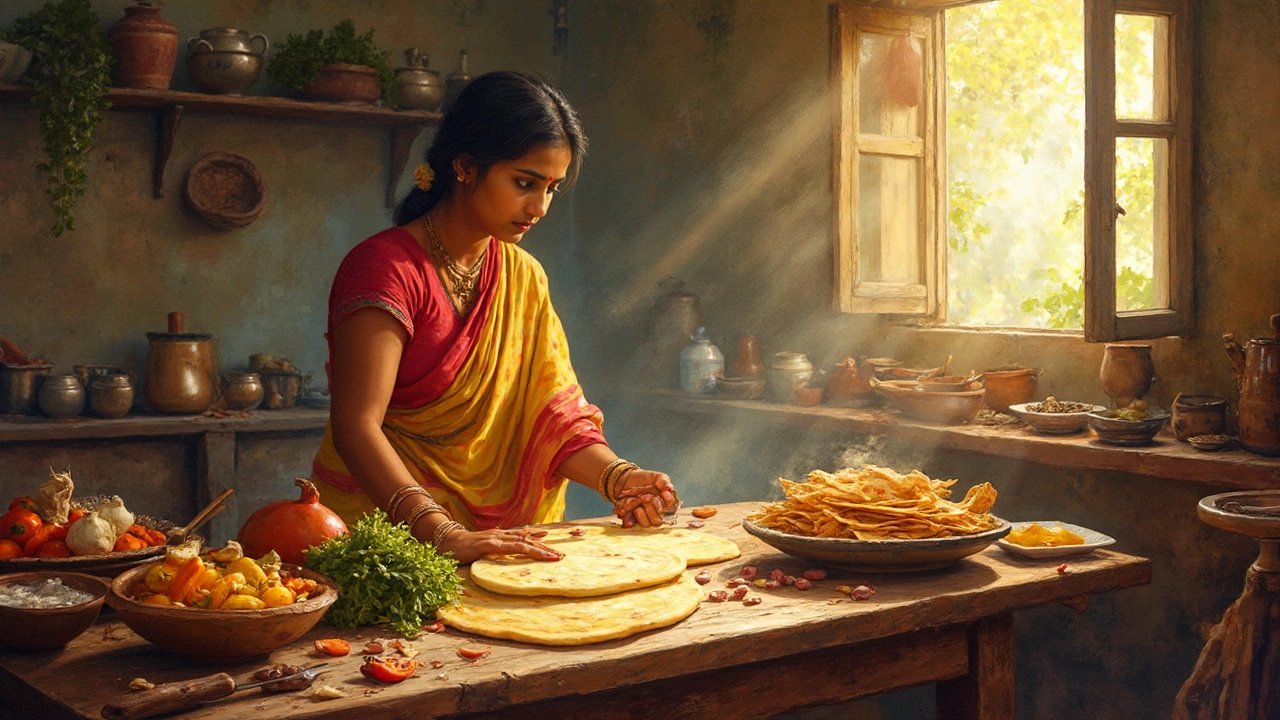
Roti: Is It Really a Low-Calorie Option?
Roti, a staple in many Indian households, is often perceived as a low-calorie food, but how accurate is this belief? This article dives into the nutritional value of roti, giving you insights on calories, how pairing it with different foods like sabzi or ghee affects its calorie count, and tips for including roti in a balanced diet. Whether you’re counting calories or just curious about what you eat, this is your go-to guide on understanding roti's place in your diet.