Thai Food: Exploring Flavors, Techniques, and Everyday Inspiration
When talking about Thai Food, the cuisine of Thailand known for its vibrant balance of sweet, sour, salty, bitter, and umami flavors. Also known as Siamese cuisine, it brings together fresh herbs, fiery chilies, and fragrant pastes to create dishes that dance on the palate. If you love bold taste and quick, healthy meals, you’ll find this cuisine both exciting and approachable.
One core building block is Curry, a sauce base made from a blend of herbs, spices, and aromatics that varies across regions. In Thai cooking, curry often leans on coconut milk for creaminess, yet the spice mix can be light, like a green curry, or deep, like a red or massaman. Thai food employs curry to layer flavor, and mastering a simple curry paste unlocks a world of dishes from soups to stir‑fries.
Spices and Herbs: The Flavor Engine
Spices, dried seeds, bark, or roots that add heat, aroma, and depth such as lemongrass, galangal, and kaffir lime are the heartbeat of Thai meals. They work hand‑in‑hand with fresh herbs like Thai basil and cilantro, creating the signature bright and fragrant profile. When you combine these spices with the right amount of chili, you get that familiar heat that makes Thai dishes unforgettable. The balance of spice and herb also influences the texture, turning a simple stir‑fry into a multi‑dimensional experience.
Another pillar is Rice, the staple grain that serves as the foundation for most meals. Jasmine rice, with its subtle perfume, pairs perfectly with saucy curries, while sticky rice is the go‑to for northern dishes and desserts. Knowing when to choose a fluffy versus a glutinous variety helps you match texture to sauce, ensuring each bite feels right.
Thai cooking also respects the timeless principle of flavor balance. Sweetness from palm sugar, sourness from lime juice, saltiness from fish sauce, bitterness from certain herbs, and umami from shrimp paste or fermented soy all play a role. This five‑point system mirrors the way Indian chefs balance spices and herbs, which you’ll notice in several of our articles below. By tweaking one element, you can transform a dish from mild to bold without changing the core ingredients.
Beyond the basics, the techniques you’ll find here are useful for anyone who enjoys quick weeknight meals or wants to experiment with bold flavors. From mastering the perfect rice soak for a light curd‑based batter to understanding when to add garlic and ginger for max aroma, the tips in the posts below cover a wide range of skills. Whether you’re curious about meat choices, vegetarian meal planning, or superfood boosts, you’ll see how these ideas intersect with Thai cooking principles.
Now that you have a solid grounding in the key ingredients, flavor rules, and cooking methods, scroll down to explore our curated collection. You’ll find practical guides on everything from spice blends to rice preparation, each designed to help you bring authentic Thai food to your kitchen with confidence.
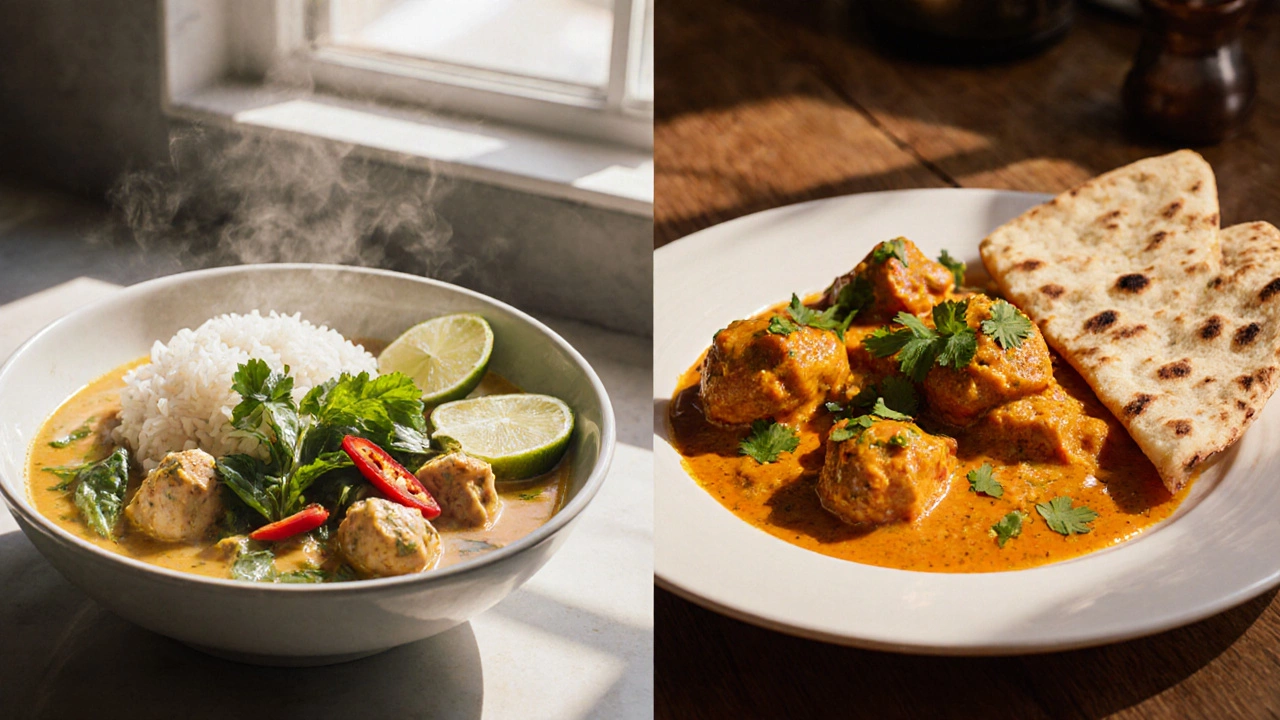
Thai vs Indian Food: Which Is Healthier?
Compare Thai and Indian cuisines on calories, fats, sugar, sodium, and nutrients. Learn which dishes are healthier and get practical tips plus easy recipes.