What is India's Most Popular Dessert? A Guide to Indian Sweets
 Mar, 27 2026
Find Your Perfect Indian Sweet
Not sure which traditional sweet suits your palate? Answer a few quick questions to find the perfect match.
Sweet Name
Description goes here...
The Great Debate Over India's Favorite Sweet
You walk into any shop across the country, from Delhi to Kerala, and you see rows of glittering confections. But there is one specific treat that consistently wins arguments among families, friends, and even professional chefs. When people ask what is India's most popular dessert, the answer usually points toward the same spongy, syrup-soaked ball. While opinions vary slightly by region, one contender stands above the rest in terms of universal recognition and consumption.
Gulab Jamun: The Undisputed King
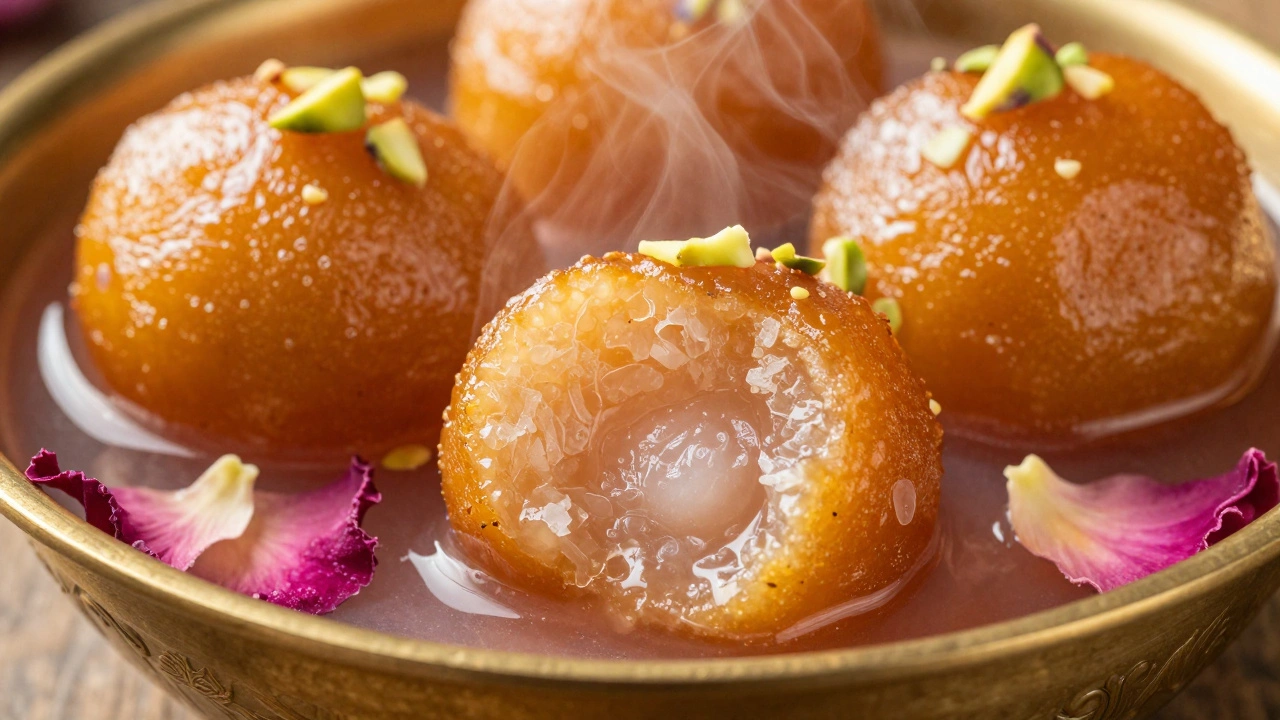
If you have to pick just one dish to represent the entire nation's palate, it has to be Gulab Jamun. It is difficult to imagine an Indian wedding cake or birthday celebration without this sweet sitting at the center of the table. Unlike a dry biscuit or a rich chocolate bar, this treat relies on the perfect balance between the dough ball and the sugar syrup.
Gulab Jamun is a traditional Indian dessert made from milk solids or mawa, deep-fried until golden brown, and soaked in rose-flavored sugar syrup. Also known as Rose Jamuns in some regions, these sweets originated in North India but have spread globally through the diaspora. They are typically served warm, offering a soft, chewy texture that melts in your mouth. Major brands like Haldiram's and Amul produce ready-made versions, confirming its mass appeal.
Why does everyone love it? The magic lies in the chemistry. You take dried milk solids (mawa), knead them gently with flour, and shape them into small balls. Then comes the critical frying stage. If you fry them too fast, they crack. If you fry them too slow, they turn black. The goal is a light golden crust that absorbs the syrup later. That soaking process turns the outside sticky and the inside moist. It is a textural adventure that few other desserts can match.
Contenders for the Crown
While Gulab Jamun takes the top spot, the landscape of Indian confectionery is diverse. You cannot talk about sweet preferences without mentioning the heavy hitters that compete regionally. In Maharashtra, you might hear people argue that Puran Poli is superior. In Kolkata, the conversation shifts immediately towards Rasgullas. Yet, when measured by sales volume and cultural visibility nationwide, Gulab Jamun remains the leader.
Laddu: The Festival Essential
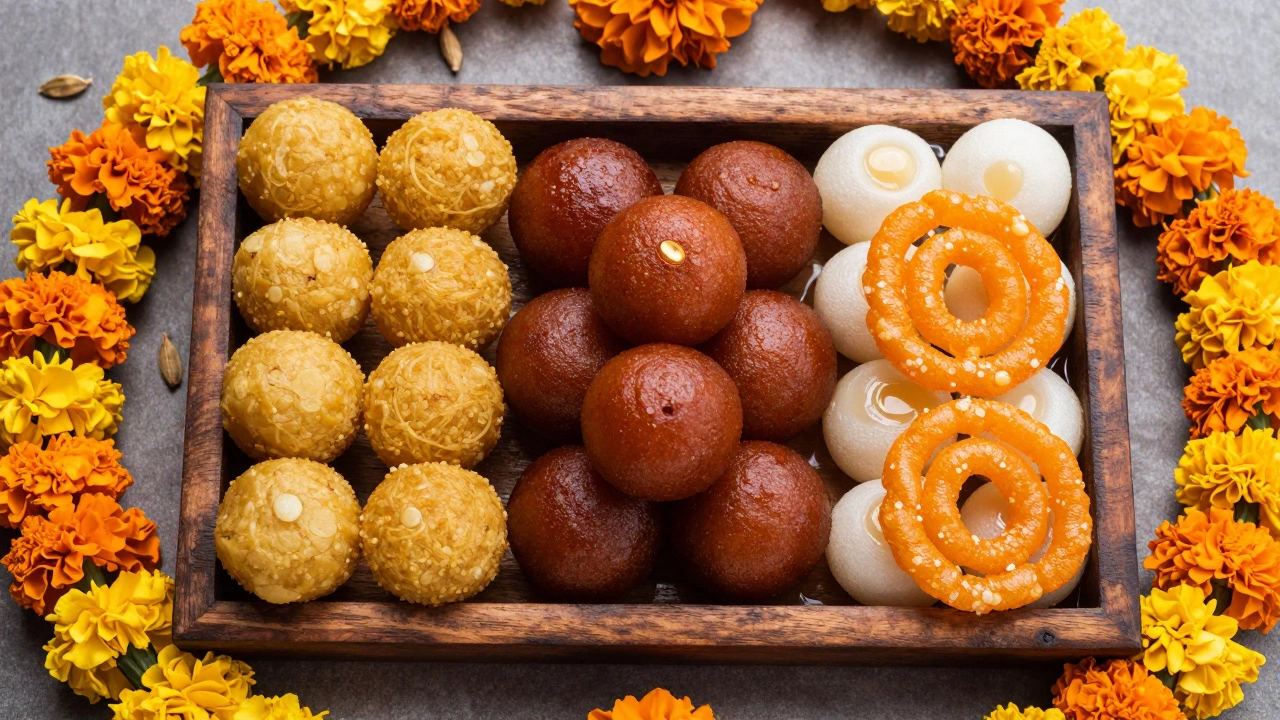
Next on the list is the humble Laddu, specifically the Boondi Laddu and Moong Dal Laddu. During Diwali, households churn out tons of these. Boondi Laddu consists of tiny fried droplets of batter bound together with molten sugar or ghee. It crunches differently than a Jamun. It breaks apart easily in the hand. While people buy Laddus in bulk for gift-giving during religious occasions, Gulab Jamun gets eaten individually more often throughout the year.
Jalebi: The Crunchy Star
Then there is Jalebi. This spiraled sweet is fried batter soaked in syrup, similar to Gulab Jamun in preparation but different in texture. It starts crispy and softens after an hour. Many street vendors serve Jalebi mixed with Rabdi (thickened clotted cream). It is a breakfast item for many in Gujarat and Rajasthan. Despite being famous, it is less frequently found in high-end banquets compared to the versatile Jamun.
Rasgulla: The Eastern Delight
In West Bengal and Odisha, the Rasgulla reigns supreme. These are sponge-like balls made from chena cheese. They sit in thin sugar water rather than thick syrup. Because they contain no flour, some consider them gluten-free options for modern diets. While extremely popular in the east, they require quick consumption as they spoil faster than Jamuns due to higher moisture content.
| Sweet Name | Main Ingredient | Texture | Best Region |
|---|---|---|---|
| Gulab Jamun | Mawa / Milk Solids | Spongy, Soft | Pan-India |
| Laddu | Cottage Cheese / Flour | Dense, Crumbly | South & Central India |
| Jalebi | Wheat Flour / Rice Flour | Crispy to Soft | West India |
| Rasgulla | Chena Cheese | Spongy, Juicy | West Bengal |
Cultural Importance of the Jamun
The dominance of Gulab Jamun isn't accidental. It survived decades of culinary change because it travels well. You can pack it in a box for hours, and it stays intact. During major festivals like Diwali, Eid, and Christmas, these sweets become currency of love. Elders give them to children, hosts serve them to guests, and hotels list them as their signature dish.
Consider the scenario of a family gathering. You place a plate of cookies, a bowl of fruits, and a tray of Gulab Jamuns on the table. Guess which one disappears first? Statistics from major food delivery platforms in cities like Mumbai, Bangalore, and Hyderabad show that Indian sweets categories dominate order volumes during festive months. Among those, the variants of Jamun consistently rank highest.

How Tradition Evolves With Taste
We are seeing changes now in 2026. Health consciousness has pushed some consumers away from pure sugar-heavy treats. However, the Gulab Jamun has adapted. Restaurants now offer versions baked instead of fried. Some places infuse the mawa with saffron or pistachio dust. Even healthier alternatives use steamed versions to reduce oil intake. Despite these twists, the core identity remains the same: milk solids soaked in syrup.
There is also the question of commercialization. Supermarket chains sell packets of ready-to-eat Jamuns. This availability ensures that even young people, who may not cook themselves, still know the taste. It is accessible comfort food. You do not need a chef to enjoy it, and you do not need to travel far to buy it.
Storage and Serving Tips
Since you might want to try making or buying some, knowing how to handle it matters. Freshly made Gulab Jamuns keep for about three days in the fridge if covered properly. The syrup helps preserve them naturally. Always let them come to room temperature before eating. Cold syrup becomes stiff and ruins the texture.
- Freshness: Eat within 24 hours of purchase for maximum sponginess.
- Temperature: Warm serving enhances flavor release.
- Pairing: Serve with Chai or a scoop of vanilla ice cream.
- Shelf Life: Freezing extends life up to one month; thaw slowly.
Avoid microwaving frozen Jamuns directly. Heat them slowly so the inside warms up evenly. If you follow these rules, you respect the tradition and get the best experience possible.
Homemade Versus Store-Bought
Making these at home is rewarding but tricky. The ratio of baking soda to khoya determines how big the balls grow while frying. Too much soda makes them hollow. Too little keeps them dense. Buying from a trusted 'mithai wala' guarantees consistency. However, homemade versions often have better taste because fresh ingredients are used without preservatives.
Many moms in Mumbai pass down secret tricks, like adding a pinch of lemon juice to the dough to prevent cracking. This acidic touch neutralizes the alkalinity of the baking soda. Small tweaks make a massive difference in the final quality. These secrets contribute to the legacy of the dish, keeping it alive in kitchens rather than just factories.
Final Thoughts on the Sweet Kingdom
Deciding on a single favorite is always subjective. Someone raised in Punjab might swear by Phirni, while a person from Tamil Nadu prefers Payasam. But looking at data, reach, and global recognition, Gulab Jamun holds the title. It is the ambassador of Indian cuisine. Whether you eat one or ten, it brings the same smile to your face.
Understanding the history and preparation adds depth to enjoying the flavor. You realize it is not just sugar; it is a craft. The skill lies in the frying heat and the timing of the syrup soak. This complexity elevates it above generic candies. It represents the labor of love that goes into feeding loved ones.
So, the next time you face a dilemma at a bakery counter, remember the consensus. You cannot go wrong with the classic choice that defines generations of celebrations. It remains the heartbeat of our dessert culture.
Is Gulab Jamun suitable for vegetarians?
Yes, traditional Gulab Jamuns are purely vegetarian. They are made from milk solids, flour, sugar, and fat (usually ghee or oil). No meat products are involved in the standard recipe.
How long do Gulab Jamuns last in the refrigerator?
Freshly made Gulab Jamuns remain good for 3 to 4 days when stored in an airtight container in the fridge. The sugar syrup acts as a natural preservative.
Can I make Gulab Jamuns without deep frying?
Yes, modern recipes exist that air-fry or bake the dumplings instead of deep frying. This reduces oil content significantly while trying to mimic the same texture.
What is the best drink to pair with Gulab Jamun?
Traditional masala chai complements the sweetness perfectly. Cold milk or rabri are also excellent choices for those who prefer a creamier beverage pairing.
Why do my Gulab Jamuns crack while frying?
Cracking usually happens because the dough is too dry or the oil is too hot. Mixing mawa with yogurt or milk helps retain moisture, and medium-low heat prevents explosions.