Why Do We Add Soda to Dosa Batter? The Science Behind the Crispy Crunch
 Aug, 28 2026
Dosa Batter Soda Calculator
Not sure how much baking soda to add? This tool helps you find the perfect balance based on your batter's age and your kitchen environment.
Enter details to see the perfect soda ratio for your batch.
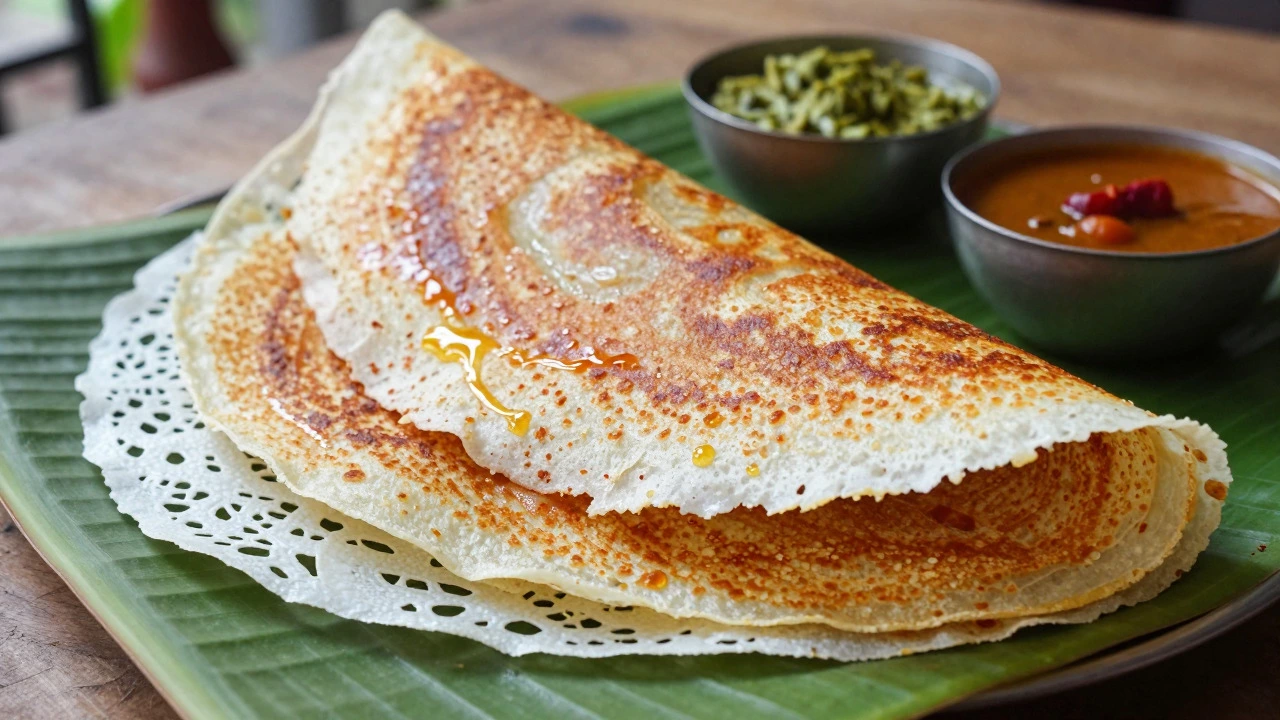
You've probably stood in your kitchen at 6 AM, staring at a bowl of fermented batter, wondering why your neighbor's dosas look like golden lace while yours resemble thick, rubbery pancakes. You followed the recipe. You soaked the rice and urad dal for eight hours. You waited overnight for the bubbles. Yet, when you pour that ladle onto the hot tawa, it doesn't spread thin, or worse, it tears apart. Here is the secret most home cooks whisper about but rarely explain: baking soda is often the missing link between a dense, heavy dosa and that shattering, airy crispiness we all crave.
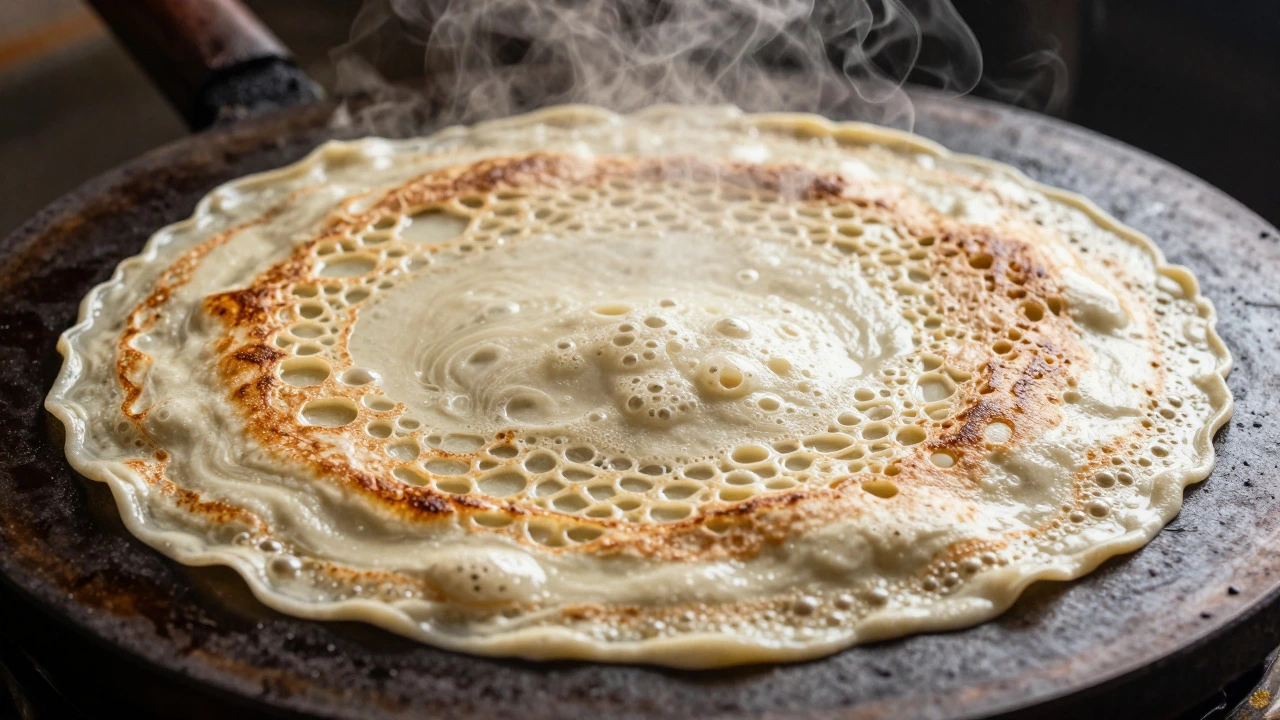
But wait-doesn't adding soda kill the probiotics? Doesn't it make the batter taste soapy? If you add too much, yes. But if you understand the chemistry, you realize that a pinch of sodium bicarbonate isn't cheating; it's engineering. It interacts with the lactic acid produced during fermentation to create carbon dioxide gas instantly. This gas creates microscopic pockets within the batter structure. When these pockets hit the heat, they expand rapidly, forcing the batter to rise and set into a lattice-like structure rather than a solid disc. That lattice is what breaks under your teeth with a satisfying crunch.
The Chemistry of Fermentation vs. Leavening
To understand why soda works, you first need to grasp what happens naturally in dosa batter. Traditional dosa batter relies on wild yeast and lactic acid bacteria (LAB), primarily from the environment and the urad dal itself. Over 8 to 12 hours, these microbes consume sugars in the rice and produce two main things: lactic acid and carbon dioxide. The lactic acid gives dosa its signature tangy flavor, while the CO2 gets trapped in the gluten network formed by the rice proteins, causing the batter to rise. This natural leavening is slow and dependent on temperature. In a cold Bengaluru winter, fermentation slows down drastically. Your batter might not rise enough, leading to flat, dense dosas.
This is where chemical leavening steps in. Baking soda (sodium bicarbonate) is an alkaline compound. When it meets the acidic environment created by the fermented batter, a rapid neutralization reaction occurs. Unlike yeast, which needs time to eat and breathe, baking soda reacts immediately upon contact with moisture and acid. This provides an instant boost of gas production right before cooking. It compensates for under-fermented batter or helps maintain fluffiness in batches that have been sitting out for too long, where the yeast activity has slowed down.
| Feature | Natural Fermentation | With Baking Soda |
|---|---|---|
| Primary Agent | Wild Yeast & Lactic Acid Bacteria | Sodium Bicarbonate + Lactic Acid |
| Gas Production Speed | Slow (hours) | Instant (seconds) |
| Flavor Profile | Tangy, complex, sour | Milder tang, slightly metallic if overused |
| Texture Result | Soft interior, moderate crisp | Airy, brittle, highly crisp exterior |
| Temperature Sensitivity | High (slows in cold) | Low (works regardless of ambient temp) |
When Should You Actually Add Soda?
Not every batch of dosa batter needs baking soda. If you live in a warm climate, say Chennai or Mumbai during summer, your batter ferments vigorously on its own. Adding soda here can result in a bitter aftertaste and a yellowish color due to excessive Maillard reaction acceleration. However, there are specific scenarios where soda becomes your best friend.
First, consider the weather. If you are making dosas in air-conditioned rooms or during monsoon seasons when humidity is high but temperatures drop, fermentation stalls. A quarter teaspoon of baking soda per liter of batter can jumpstart the rise. Second, think about batter age. Batter stored in the refrigerator for more than three days loses yeast vitality. The bacteria continue to produce acid, making the batter very sour, but the yeast stops producing significant gas. The batter becomes runny and acidic. Adding a tiny amount of soda neutralizes some excess acidity and restores volume without needing to re-ferment.
There is also the matter of ingredient ratios. Some people prefer a higher ratio of rice to lentils (e.g., 4:1) for a lighter, less protein-heavy dosa. Rice lacks the strong mucilage and protein structure of urad dal, meaning it traps less gas naturally. These batters tend to be thinner and less fluffy. A pinch of soda adds structural integrity through gas expansion, preventing the dosa from becoming a wet crepe that sticks to the pan.
The Golden Ratio: How Much Is Too Much?
Here is where most home cooks fail. They treat baking soda like salt-a seasoning to adjust to taste. It is not. It is a potent chemical agent. Using too much leads to three disasters: a soapy taste, a brownish-yellow discoloration, and a gritty texture.
The general rule of thumb used by professional dosa makers in South India is approximately 1/4 teaspoon of baking soda per 1 cup of dry ingredients (rice + dal combined) used to make the batter. Alternatively, if measuring by wet batter volume, use about 1/8 to 1/4 teaspoon per liter of batter. Start small. You can always add more in the next batch, but you cannot remove it once mixed.
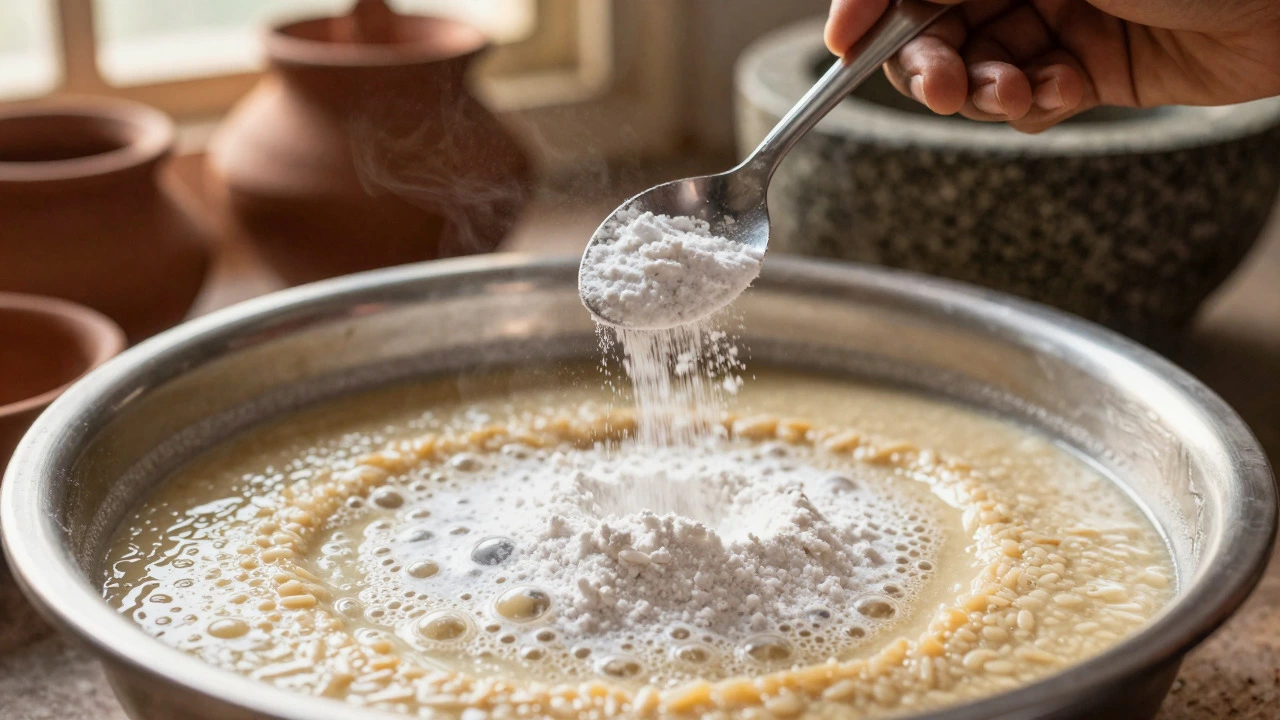
Timing matters just as much as quantity. Do not add baking soda at night when you mix the batter. If you add it then, the reaction will occur slowly throughout the night, wasting the gas production before you even turn on the stove. By morning, the bubbles may have collapsed, leaving you with a flat batter. Instead, add the soda just before you start cooking. Sprinkle it over the surface of the batter and gently fold it in using a spoon or whisk. Do not beat it aggressively, as this knocks out the existing bubbles. Let it sit for 5-10 minutes after mixing. You should see the batter become visibly aerated and slightly foamy. That foam is your proof that the chemistry is working.
Alternatives to Baking Soda
If you dislike the idea of using chemical leaveners, or if you find the taste of baking soda intrusive even in small amounts, there are natural alternatives that serve similar functions.
- Eno Fruit Salt: This is essentially a mixture of sodium bicarbonate, citric acid, and sodium sesquicarbonate. It is extremely popular in street-side dosa stalls because it reacts faster and more vigorously than plain baking soda. It requires no additional acid trigger since it contains citric acid. Use half the amount you would use for baking soda.
- Fresh Yeast: Dissolving a pinch of active dry yeast in warm water and adding it to the batter boosts fermentation speed. This enhances the natural flavor profile better than soda but still requires time to work. It is ideal if you forgot to soak the dal early enough.
- Pomegranate Seeds: An old trick involves grinding pomegranate seeds along with the urad dal. The natural tartness aids fermentation and the seeds provide a slight textural contrast. While not a direct leavener, it improves bacterial activity.
However, note that Eno can leave a distinct medicinal aftertaste if overused. Fresh yeast is subtle but inconsistent depending on the quality of the yeast packet. For most home kitchens, controlled use of baking soda remains the most reliable method for consistent results.
Troubleshooting Common Dosa Failures
Even with the perfect batter, dosas can fail. Here is how to diagnose issues based on whether you used soda or not.
Problem: Dosas are sticking to the pan. If you added soda, ensure you are letting the batter rest for 10 minutes after mixing. Unreacted soda granules can cause uneven heating spots. Also, check your pan temperature. If the pan is not hot enough, the batter won't sear instantly, and the starches will glue themselves to the metal. Heat the pan until a drop of water sizzles and evaporates immediately.
Problem: Dosas are too dark or burnt quickly. This is a classic sign of too much baking soda. Alkaline environments accelerate the Maillard reaction (browning). Reduce the amount of soda by half in your next batch. Alternatively, lower your flame slightly. Soda makes the batter sensitive to high heat.
Problem: Dosas are soft and not crispy. If you didn't use soda, your batter likely under-fermented. Add 1/8 teaspoon of soda to the remaining batter and let it rest for 15 minutes. If you did use soda, your batter might be too watery. Thicken it by adding a few tablespoons of cooked rice paste or idli rava (semolina) and let it absorb moisture for 20 minutes before cooking again.
Problem: Soapy or bitter taste. You definitely overshot the soda. To salvage the current batch, squeeze half a lemon into the batter. The acid will help neutralize the excess alkalinity. Serve with a strongly flavored chutney or sambar to mask any residual metallic notes.
Expert Tips for Maximum Crispiness
Beyond the chemistry, physical technique plays a huge role in achieving that restaurant-style crunch. Here are a few practices I swear by in my own kitchen.
- Use Cast Iron or Carbon Steel: Non-stick pans are convenient, but they don't retain heat well. A seasoned cast iron tawa holds steady high heat, which is crucial for crisping the edges before the center dries out.
- The Water Drizzle Technique: After spreading the batter, drizzle a teaspoon of oil or ghee around the edges and center. The fat fries the top layer of the dosa while it cooks, creating a double-layer crispiness.
- Cook on Medium-High, Not High: With soda-added batter, high heat burns the outside before the inside sets. Medium-high allows the gas pockets to expand fully, creating an airy interior that stays light.
- Don't Overcrowd the Pan: Make one dosa at a time. Stacking them steams the bottom, destroying the crispiness you worked so hard to achieve.
Remember, dosa batter is a living thing. It changes with humidity, temperature, and time. Baking soda is a tool, not a crutch. Use it wisely, measure precisely, and respect the fermentation process. Once you master the balance between natural tang and chemical lift, you'll never go back to rubbery breakfasts.
Does adding baking soda destroy the nutritional value of dosa batter?
Not significantly. Baking soda does not destroy the protein or carbohydrate content. However, it can slightly reduce the availability of certain B vitamins due to the alkaline environment. The primary concern is usually taste and texture rather than nutrition. Probiotic benefits are mostly lost during cooking anyway due to high heat, so the addition of soda pre-cooking doesn't change the final probiotic count in the eaten dosa.
Can I use baking powder instead of baking soda for dosa?
Yes, but it's less common. Baking powder contains both baking soda and an acid (like cream of tartar) plus a starch filler. Since dosa batter is already acidic, the extra acid in baking powder is redundant and can alter the pH balance unpredictably. Baking soda is preferred because it specifically targets the existing lactic acid in the batter, ensuring a more controlled reaction. If you must use baking powder, use twice the amount of baking soda, but expect a milder rise.
Why does my dosa batter smell like acetone or nail polish remover?
This smell indicates over-fermentation or contamination by unwanted bacteria/yeasts. It is not related to baking soda. If the batter smells like nail polish remover, discard it. It means the fermentation went too far, breaking down proteins excessively. To prevent this, store batter in the fridge once it rises properly. Never add baking soda to batter that already smells off, as it will worsen the flavor.
Is it safe to eat dosa made with baking soda every day?
For most healthy adults, yes. The amount of sodium introduced by a pinch of baking soda is minimal compared to the salt added to the batter or the sambar/chutney served with it. However, individuals on strict low-sodium diets or those with hypertension should monitor their intake or opt for natural fermentation methods. Always consult a doctor if you have specific medical concerns regarding sodium intake.
How do I fix batter that became too runny after adding soda?
If the batter becomes too thin, it will tear easily. You can thicken it by stirring in a few tablespoons of idli rava (coarse semolina) or cooked, cooled rice blended into a smooth paste. Let it sit for 15-20 minutes to allow the starch to absorb water and swell. Avoid adding raw flour, as it will make the dosas taste pasty and prevent proper fermentation flavors from developing.