How Long Does Leftover Indian Food Last in the Fridge?
 Sep, 4 2026
Indian Leftover Freshness Checker
Select a dish below to see its recommended shelf life and storage tips based on USDA guidelines and culinary best practices.
Please select a dish from the list to view freshness data.
You know that feeling. You spent hours making a rich Butter Chicken or a delicate Kheer, and now you’re staring at Tupperware containers wondering: is this still safe to eat tomorrow? Or next week?
Indian food is tricky because it’s not just one thing. A dry Paneer Bhurji behaves differently than a soupy Dal Makhani. And don’t even get me started on milk-based sweets like Gulab Jamun. If you guess wrong, you risk stomach upset-or worse, wasting good food.
Here’s the no-nonsense guide to keeping your leftovers fresh, based on what actually happens inside your fridge.
The Golden Rule: The 3-Day Limit
For most cooked Indian savory dishes, three days is your hard stop. After 72 hours, bacterial growth starts to outpace flavor preservation. This applies to gravies, dals, and vegetable curries. Why? Because moisture loves bacteria. The more liquid in your dish, the faster it spoils.
Think about Rajma Chawal. The kidney beans are dense and hold moisture for days. But if you left that plate out on the counter during dinner, the clock started ticking before it hit the fridge. The USDA recommends refrigerating perishable foods within two hours of cooking. In hot climates like Bangalore, where I live, cut that down to one hour. Heat accelerates bacterial multiplication exponentially.
Savory Dishes: What Lasts How Long
Not all curries are created equal. Here’s a breakdown of common Indian staples and their realistic fridge lifespan when stored properly in airtight glass containers.
| Dish Type | Examples | Fridge Life | Freezer Life |
|---|---|---|---|
| Liquid Gravies/Dals | Dal Tadka, Sambar, Rasam | 3-4 Days | 1-2 Months |
| Vegetable Curries (Dry) | Aloo Gobi, Bhindi Masala | 3 Days | 1 Month |
| Vegetable Curries (Wet) | Palak Paneer, Malai Kofta | 2-3 Days | 1 Month |
| Meat/Fish Curries | Chicken Curry, Fish Fry | 2-3 Days | 2-3 Months |
| Rice & Biryani | Pulao, Hyderabadi Biryani | 1-2 Days | 1 Month |
| Roti/Chapati | Phulka, Paratha | 5-7 Days | 1 Month |
Notice rice? It’s often the first thing to go bad. Cooked rice can harbor Bacillus cereus spores that survive cooking. If you leave biryani out too long, those spores multiply and produce toxins that reheating won’t kill. So, if your rice smells slightly sour or feels slimy, toss it. Don’t gamble.
The Tricky World of Indian Sweets
This is where things get confusing. People treat Mithai like cake, but many Indian sweets are dairy-based and highly perishable. Others are sugar-heavy preservatives in disguise.
Milk-Based Sweets (High Perishability)
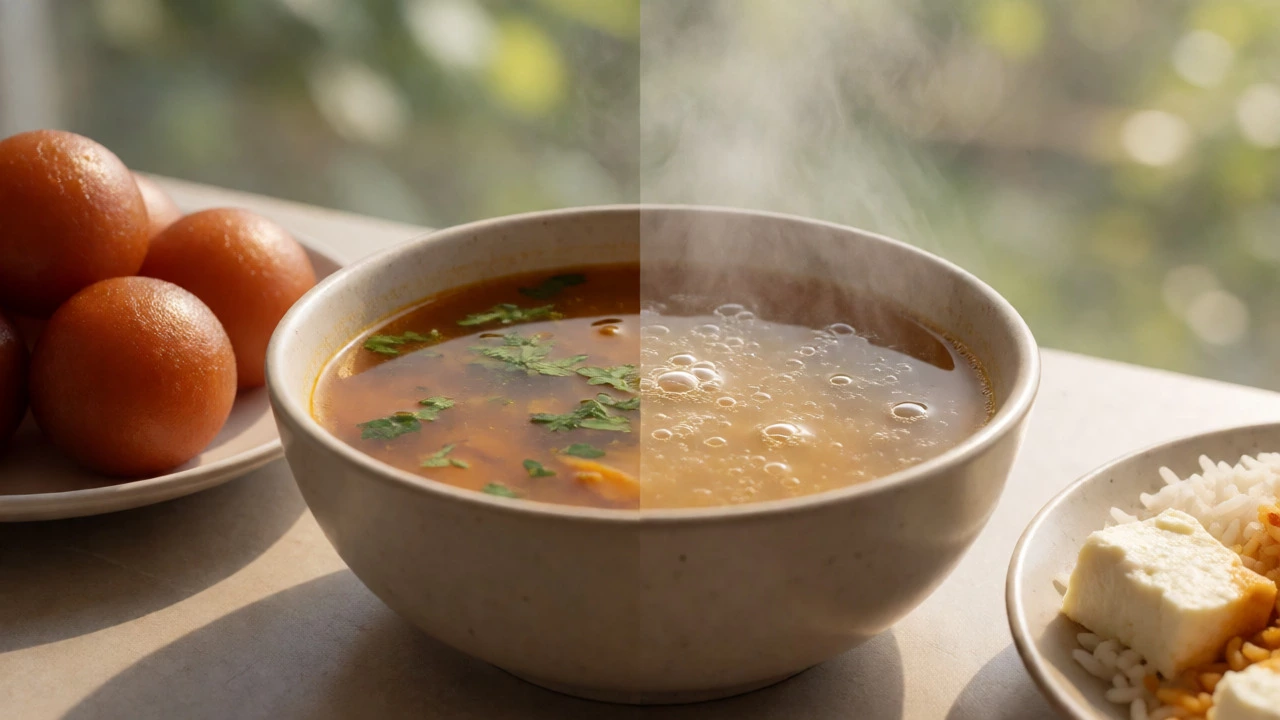
Sweets made from khoya, milk solids, or paneer-like Rasgulla, Rasmalai, Kaju Katli, and Barfi-are fragile. They typically last only 2-3 days in the fridge. Rasmalai, soaked in sweetened milk, is especially prone to fermentation. If the syrup turns cloudy or bubbles appear, discard it immediately. These aren’t meant for long-term storage.
Fried & Sugar-Syrup Sweets (Moderate Shelf Life)
Gulab Jamun and Jalebi have better longevity due to high sugar content, which acts as a preservative. Gulab jamuns soaked in syrup can last up to a week in the fridge if the syrup is properly concentrated. However, texture suffers. They become soggy. For best results, store them separately from syrup and combine just before serving.
Dry & Nut-Based Sweets (Longest Lasting)
Things like Til Laddu, Coconut Macaroons, or dark chocolate-infused barfis last longer. Dry laddus with minimal moisture can stay fresh for 2 weeks in an airtight container at room temperature, or up to a month in the fridge. Always check for oil rancidity-a stale smell means they’ve turned.
Storage Mistakes That Ruin Flavor (and Safety)
You might be storing your food correctly, but using the wrong method. Here are the top errors I see in kitchens across India:
- Storing hot food directly: Putting steaming dal into the fridge raises the internal temperature of your refrigerator. This endangers other items like milk and vegetables. Let food cool to room temperature (within 2 hours) before sealing.
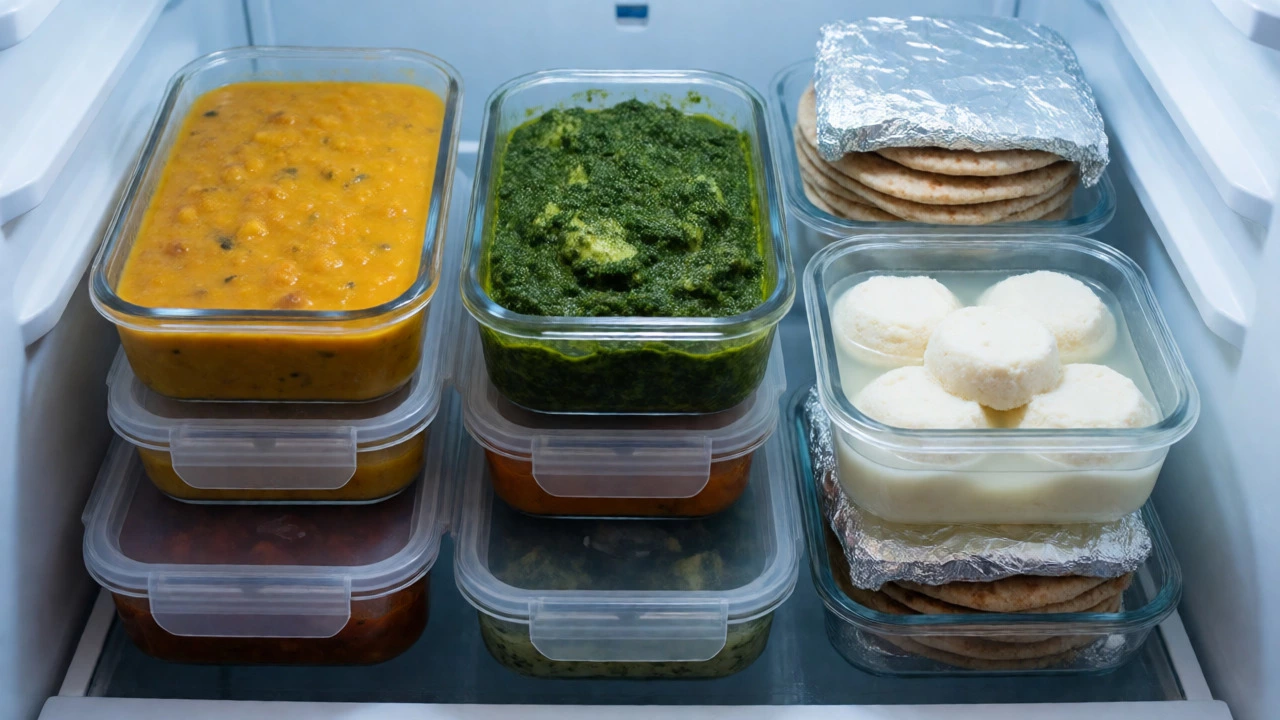
- Using plastic containers: Turmeric and chili oils stain and degrade plastic over time. Worse, some plastics leach chemicals when heated. Glass containers are superior for Indian curries. They don’t absorb odors, and you can microwave them safely.
- Crowding the fridge: Air needs to circulate to keep temperatures consistent. If you stack five heavy pots of curry tightly, the center ones stay warm longer, creating a bacterial incubator.
- Reheating multiple times: Every time you reheat a portion, you bring it through the "danger zone" (40°F-140°F). Reheat only what you plan to eat. Scoop out a single serving rather than heating the whole pot repeatedly.
Signs Your Leftovers Have Gone Bad
Don’t rely solely on dates. Use your senses. Indian spices mask subtle off-flavors, so look for these red flags:
- Smell: Sourness in dal or sambar is normal if fermented intentionally (like idli batter), but unexpected sourness in meat curry means spoilage. A yeasty or alcohol-like scent in sweets indicates fermentation.
- Texture: Sliminess on the surface of gravy or paneer is a clear sign of bacterial biofilm formation. If your rasam develops a film, skip it.
- Visual: Mold isn’t always fuzzy. Look for discoloration, unusual spots, or separation of fats that doesn’t remix upon stirring.
Freezing: The Best Option for Batch Cooking
If you make large batches of Sambar, Rasam, or meat curries, freeze them. Most Indian gravies freeze beautifully. Dairy-based gravies (like korma) may separate slightly upon thawing, but vigorous stirring restores emulsion.
Pro tip: Leave headspace in freezer bags. Liquids expand when frozen. Label everything with the date. Frozen dal tastes fine after 3 months, but quality drops after that. Avoid freezing potatoes in curries-they turn grainy and watery. Add fresh potatoes upon reheating instead.
FAQ: Common Questions About Indian Leftovers
Can I eat leftover chicken curry after 4 days?
It’s risky. While technically possible if refrigerated perfectly, poultry tends to spoil faster than vegetarian dishes due to protein structure and moisture. By day 4, the texture often degrades, and the risk of bacterial growth increases significantly. Stick to 3 days max for safety.
Why does my dal taste different after a day?
Flavor development! Many Indian dishes, especially dals and curries, taste better the next day. Spices continue to meld and penetrate the ingredients overnight. This is why restaurant-style curries often taste richer than freshly made home versions. Just ensure it was cooled quickly to prevent spoilage.
How do I store Roti to keep it soft?
Wrap cooled rotis in aluminum foil or place them in a cloth-lined steel box before putting them in the fridge. Plastic bags can trap steam, making them soggy, or dry them out if sealed too tightly. To reheat, sprinkle a few drops of water and microwave for 20 seconds, or toast on a tawa.
Do Indian sweets need refrigeration?
Yes, most do. Milk-based sweets like Rasmalai and Kalakand must be refrigerated. Sugar-heavy sweets like Besan Ladoo can stay at room temperature for a few days in cool weather, but in summer, refrigeration extends their life and prevents oil separation. Always check the specific recipe guidelines.
Is it safe to reheat food twice?
It’s not recommended. Each cooling and reheating cycle gives bacteria a chance to grow. Ideally, divide large portions into smaller, single-serving containers before storing. This way, you only heat what you need once, minimizing exposure to temperature fluctuations.