What Spices Are Used in Indian Sweets? A Flavor Guide
 Sep, 29 2026
Indian Sweet Spice Matcher
Select a sweet below to discover its essential spice profile, usage tips, and common mistakes.
Primary Spice
Secondary/Complementary
Common Mistakes to Avoid
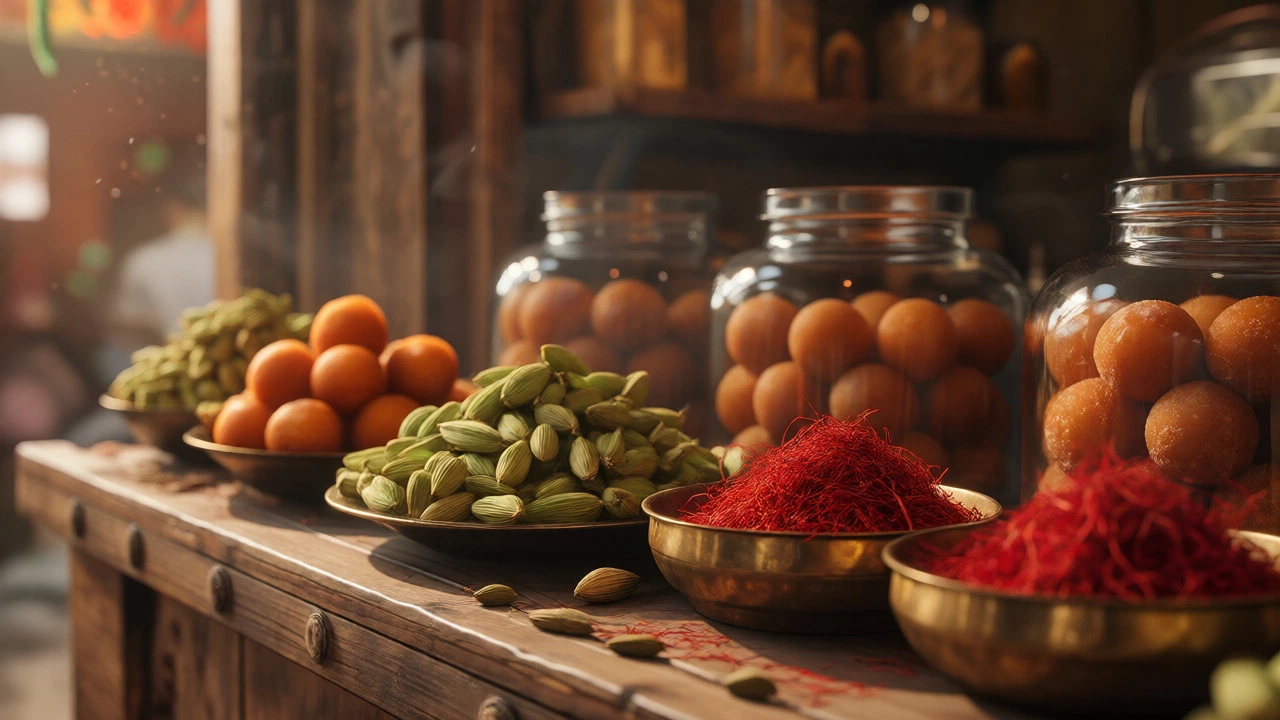
You know that smell? The one that hits you when you walk past a sweet shop in Mumbai or Delhi. It’s not just sugar and milk. It’s the warm, earthy punch of cardamom, a spice derived from the seeds of Elettaria cardamomum, known for its intense aromatic profile. If you’ve ever tried to recreate your favorite Indian sweets at home and it tasted flat, you probably missed the spice blend. Most people think Indian desserts are just about sweetness. They’re wrong. They’re about balance. Cardamom cuts through the richness of ghee. Nutmeg adds depth to kheer. Saffron turns plain rice pudding into gold.
Let’s be real: getting these spices right is tricky. Too much nutmeg and your dessert tastes like soap. Too little saffron and it looks pale. This guide breaks down exactly which spices belong in which sweets, how to use them, and why they matter. We’ll cover the big players-cardamom, saffron, nutmeg, cinnamon, and rose-and give you practical tips so your next batch of Gulab Jamun actually smells like the ones from the bakery.
The King of Indian Dessert Spices: Green Cardamom
If there’s one spice that defines Indian sweets, it’s green cardamom. You cannot make authentic Rasgulla, a spongy cheese ball soaked in light sugar syrup, Kaju Katli, a diamond-shaped cashew fudge, or Mysore Pak, a rich gram flour and ghee sweet without it. It’s not optional. It’s structural.
Why does it work? Cardamom has citrusy, floral notes that lift heavy dairy flavors. Think about Kheer, slow-cooked rice pudding made with milk, sugar, and rice. Without cardamom, it’s just sweet milk. With it, it’s complex. The oil in the seeds releases slowly during cooking, creating a lingering aroma that stays on your palate long after you swallow.
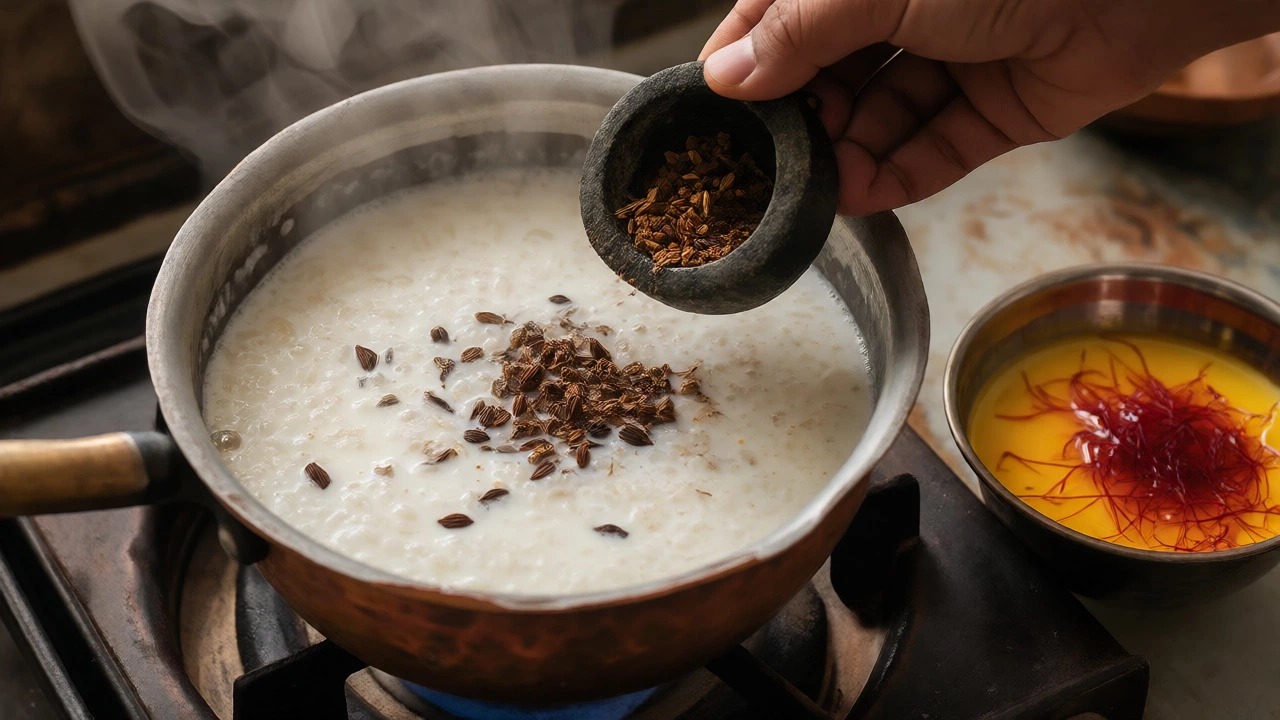
How to use it: Don’t buy pre-ground powder if you can help it. It loses potency fast. Buy whole pods. Crack them open and crush the black seeds inside using a mortar and pestle. For every liter of milk in a kheer recipe, use 4-5 pods. Add them early so the flavor infuses, but remove the pods before serving if you don’t want bits in your teeth. Or grind the seeds fresh right before adding them to doughs like those for Ladoo.
Saffron: The Golden Luxury
Saffron is expensive, yes. But it’s also irreplaceable. When you see bright yellow streaks in Shrikhand, strained yogurt flavored with sugar and spices or Jalebi, deep-fried batter soaked in sugar syrup, that’s saffron doing its job. It provides both color and a distinct honey-like, metallic aroma.
A common mistake? Throwing dry threads into hot milk. That wastes money. You need to bloom it first. Take a pinch of saffron threads (about 10-15) and soak them in two tablespoons of warm milk for 15 minutes. The liquid will turn deep orange. Then stir this into your dessert base. This ensures even distribution. No white spots. No wasted threads.
Saffron pairs best with mild bases. It shines in Peda, soft milk solids cooked down with sugar, Basundi, thickened sweetened milk, and Kesar Kulfi. Avoid pairing it with strong spices like cloves or heavy chocolate. It gets lost.
Nutmeg and Mace: The Warm Background Notes
Nutmeg (Jatiphala) and mace (Javitri) come from the same fruit. Nutmeg is the seed; mace is the aril (the red webbing around the seed). They taste similar, but mace is lighter and more delicate. In Indian sweets, we mostly use nutmeg because it’s cheaper and easier to find.
Nutmeg adds warmth. It’s subtle. You shouldn’t taste "nutmeg" directly. You should just feel like the dessert is comforting. It’s essential in Thandai, a cold milk drink often served as a dessert accompaniment, and many winter-specific sweets like Gajar Ka Halwa. Why? Because carrots and nuts have earthy tones that nutmeg complements perfectly.
Careful here: Nutmeg contains myristicin, which can cause nausea in high doses. More than half a teaspoon per liter of milk can ruin a dish. Stick to a quarter teaspoon for a standard family-sized pot. Grate it fresh over the finished dessert rather than cooking it too long, as heat diminishes its aroma quickly.
Cinnamon and Cloves: The Syrup Secret
When you make sugar syrup for Gulab Jamun or Jalebi, you rarely add spices directly to the fried dumplings. Instead, you infuse the syrup. This is where cinnamon sticks and cloves shine. They provide a woody, spicy backbone that prevents the syrup from tasting cloyingly sweet.
Here’s the trick: Use a single stick of cinnamon and 2-3 cloves per cup of water. Boil them together. Let the syrup cool slightly before pouring it over the hot fried sweets. The temperature shock helps absorption. If you boil the spices too hard, the clove flavor becomes medicinal. Keep it gentle.
Some regional variations swap cinnamon for Fennel Seeds. In South India, fennel is common in Sakkarai Pongal. It offers an anise-like freshness that contrasts well with jaggery. Experiment based on your region.
Rose Water and Rose Petals: The Floral Finish
Rose isn’t technically a spice in the botanical sense, but in Indian cuisine, it functions like one. It’s used for aroma. Rabri, condensed sweetened milk, often gets a splash of rose water at the end. So does Firni, a ground rice pudding set in clay pots.
Quality matters immensely. Cheap rose water tastes like perfume. Look for brands that list "rose distillate" or "natural rose essence." If you can find edible dried rose petals, sprinkle them on top for texture and visual appeal. They add a slight tartness that balances the sugar.
| Dish Name | Primary Spice | Secondary Spice | Usage Tip |
|---|---|---|---|
| Kheer / Payasam | Green Cardamom | Saffron | Add cardamom while boiling milk; bloom saffron separately. |
| Gulab Jamun | Cardamom (in dough) | Cinnamon/Cloves (in syrup) | Infuse syrup, do not boil spices with jamuns. |
| Kaju Katli | Green Cardamom | None | Use only cardamom powder; other spices clash with cashew. |
| Gajar Ka Halwa | Green Cardamom | Nutmeg | Add nutmeg only at the very end to preserve aroma. |
| Shrikhand | Saffron | Cardamom | Stir gently after straining yogurt to keep texture smooth. |
| Mysore Pak | Green Cardamom | None | Mix thoroughly into gram flour batter before cooking. |
Regional Variations and Hidden Gems
India is huge. What works in Punjab might not fly in Kerala. In North India, dairy-based sweets dominate, so cardamom and saffron rule. In South India, coconut and jaggery are key. Here, you’ll find more use of Edible Camphor. Yes, camphor. Just a tiny pinch in certain temple offerings or specific halwas. It provides a cooling, mentholated kick. Do not confuse it with synthetic camphor used for burning. Only use food-grade camphor.
In Bengal, Chhana-based sweets like Rosogolla rely almost exclusively on cardamom. Sometimes they add a hint of Rose Water for fragrance. But never cinnamon. Cinnamon feels too heavy for their light, airy textures.
West Indian sweets, particularly from Gujarat, sometimes use Black Salt. Wait, salt in sweets? Yes. A pinch of black salt in Sukhdi (jaggery bar) enhances the caramel notes of the jaggery. It’s a umami booster.
Common Mistakes to Avoid
First, buying old spices. Check the date. If your cardamom powder looks gray instead of greenish-yellow, throw it out. It’s oxidized. Second, adding spices too late. Cardamom needs time to release oils. Add it during cooking, not just as a garnish. Third, ignoring quality. Artificial vanilla extract is fine for cakes, but in Indian sweets, it tastes fake. Stick to natural sources.
Also, don’t over-spice. Indian sweets are meant to be comforting, not overwhelming. If you can clearly identify every spice individually, you’ve added too much. The goal is harmony. The spices should support the main ingredient-whether it’s milk, flour, or fruit-not shout over it.
Practical Tips for Home Cooks
- Grind Fresh: Invest in a small electric grinder or a good mortar. Pre-ground spices lose 50% of their volatile oils within weeks.
- Test Your Syrup: When making sugar syrup with spices, taste it before adding the fried elements. Adjust cardamom or saffron now, not later.
- Store Properly: Keep cardamom pods in an airtight glass jar away from sunlight. Plastic containers absorb odors.
- Start Small: If you’re new to saffron, start with 5 threads. You can always add more, but you can’t take it out.
- Pair Wisely: Match spices to base ingredients. Dairy loves cardamom/saffron. Jaggery loves ginger/camphor/black salt. Flour loves cinnamon/cloves.
Mastering these spices transforms your cooking. Suddenly, your homemade Barfi doesn't just taste sweet-it tastes professional. It triggers memories. That’s the power of correct seasoning.
Can I substitute cardamom with vanilla?
Not really. Vanilla and cardamom have different chemical profiles. Vanilla is creamy and boozy; cardamom is citrusy and floral. Substituting them changes the identity of the sweet entirely. If you must, use less vanilla, but expect a Western-style flavor profile rather than an authentic Indian one.
Is saffron necessary for Kheer?
No, it is not strictly necessary. Many home cooks skip it due to cost. However, saffron provides a distinct aroma and golden color that cardamom alone cannot achieve. If you omit it, increase the cardamom slightly and consider adding turmeric for color, though the taste will differ.
Why does my Gulab Jamun taste bitter?
This is usually due to burnt baking soda or too much baking powder in the dough, not the spices. However, if you used old rancid ghee or burned the spices in the syrup (especially cloves), that can contribute. Ensure your syrup is clear and amber, not dark brown.
Which spice is used in Rasgulla?
Rasgullas typically do not contain strong spices in the dough itself. The sugar syrup they are soaked in is often lightly flavored with cardamom or rose water. Some regional versions might include a hint of saffron in the syrup, but cardamom is the most common addition.
Can I use cinnamon powder instead of sticks in syrup?
Yes, but it’s messier. Powder disperses throughout the syrup, making it cloudy and gritty. Sticks allow you to strain them out easily, resulting in a clear, elegant syrup. If using powder, use a very small amount (1/8 tsp) and accept some cloudiness.