How Healthy Is Indian Vegetarian Food? The Real Facts Behind the Myths
 Dec, 2 2025
Indian Vegetarian Food Nutrition Checker
Check the nutritional value and health impact of common Indian vegetarian dishes. Select a dish below to see if it's truly healthy or needs improvement.
Nutritional Value
Indian vegetarian food isn’t just spicy curries and naan. It’s a system of eating shaped by centuries of culture, climate, and crop cycles. But with rising health trends and global diets, people are asking: Is it really as healthy as everyone says? The answer isn’t simple. Some Indian vegetarian meals are packed with nutrients. Others are loaded with oil, refined flour, and sugar. The difference? What you eat and how it’s made.
What Makes Indian Vegetarian Food Potentially Healthy
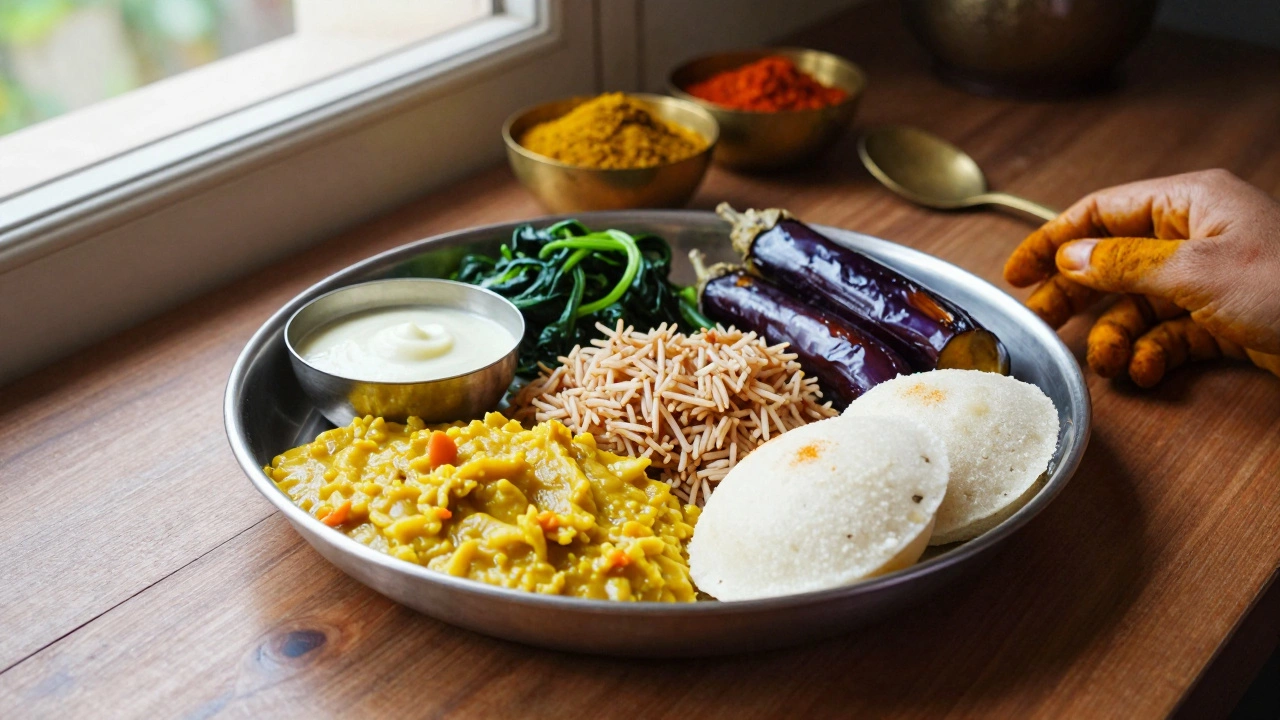
At its core, traditional Indian vegetarian cooking relies on whole foods: lentils, beans, vegetables, whole grains, spices, and dairy. These aren’t just ingredients-they’re medicine in many households. Turmeric, cumin, coriander, and fenugreek aren’t added just for flavor. They’re used for their anti-inflammatory and digestive properties. A 2023 study from the Indian Council of Medical Research found that people who ate daily lentil-based meals had lower rates of type 2 diabetes compared to those who ate refined grains as their main carb source.
Lentils, or dal, are the backbone of most Indian vegetarian plates. A single cup of cooked lentils gives you 18 grams of protein and 15 grams of fiber. That’s more than most meatless burgers. Combined with brown rice or millet roti, you get a complete amino acid profile. No supplements needed. In rural India, where meat consumption is low, this combination has kept generations healthy without processed foods.
Vegetables like spinach, okra, eggplant, and cauliflower aren’t side dishes-they’re the main event. They’re cooked slowly in minimal oil, often with garlic and ginger, preserving their nutrients. Fermented foods like idli and dosa batter, made from rice and black lentils, boost gut health. The fermentation process breaks down phytic acid, making minerals like iron and zinc easier for your body to absorb.
The Dark Side: When Indian Vegetarian Food Goes Unhealthy
But here’s the catch: modern Indian vegetarian diets aren’t always traditional. In cities, you’ll find vegetarian meals that look healthy but are anything but. Take the popular paneer tikka masala. Sounds wholesome? It’s often made with full-fat cream, butter, and deep-fried paneer cubes. One serving can hit 600 calories and 40 grams of fat. That’s more than a cheeseburger.
Then there’s the roti problem. Many households still use white flour (maida) instead of whole wheat. Maida is stripped of fiber and nutrients. It spikes blood sugar fast and leaves you hungry again within hours. A 2024 survey by the National Institute of Nutrition found that 68% of urban Indian households serve refined flour rotis daily-even among those who call themselves “vegetarian and healthy.”
Sweets are another hidden trap. Jalebi, gulab jamun, and barfi are often made with sugar syrup, hydrogenated oils, and powdered milk. A single piece of barfi can contain 30 grams of sugar-nearly the daily limit recommended by the WHO. And because they’re served at festivals and family gatherings, people think, “It’s just one time.” But for many, “one time” turns into daily.
Even snacks like samosas and pakoras are marketed as vegetarian, but they’re deep-fried in reused oil. That oil breaks down over time, creating harmful compounds. A 2022 study in the Journal of Food Science found that street food samosas in Delhi had 3x more trans fats than those made at home with fresh oil.
Regional Differences Matter
Not all Indian vegetarian diets are the same. What’s healthy in Punjab isn’t necessarily healthy in Tamil Nadu.
In South India, meals often center around rice, lentils, tamarind, and coconut. Dishes like sambar and rasam are broth-based, packed with vegetables and spices. Coconut adds healthy fats, and tamarind provides natural acidity that aids digestion. People here eat less dairy and more fermented foods, which supports gut health.
In North India, the diet leans heavier on wheat, dairy, and ghee. While ghee has beneficial fats when used in moderation, overuse leads to excess saturated fat. Paneer-heavy dishes, rich gravies, and buttered naan dominate. People in Punjab may eat more dairy, but they also burn more calories through physical labor-something urban office workers don’t replicate.
In Gujarat, meals are often sweet and savory together. That means sugar is added to dals and vegetables. It’s traditional, but it adds up. A typical Gujarati thali can have 2-3 sweet components, pushing sugar intake beyond healthy limits.
Eastern India, especially Bengal, uses mustard oil and fish (for non-vegetarians), but vegetarian meals rely on lentils, potatoes, and eggplant. Mustard oil is high in omega-3s, but it’s often heated past its smoke point, which turns it harmful. That’s a common mistake even in home kitchens.
What to Eat-and What to Skip
If you want Indian vegetarian food to be truly healthy, here’s what works:
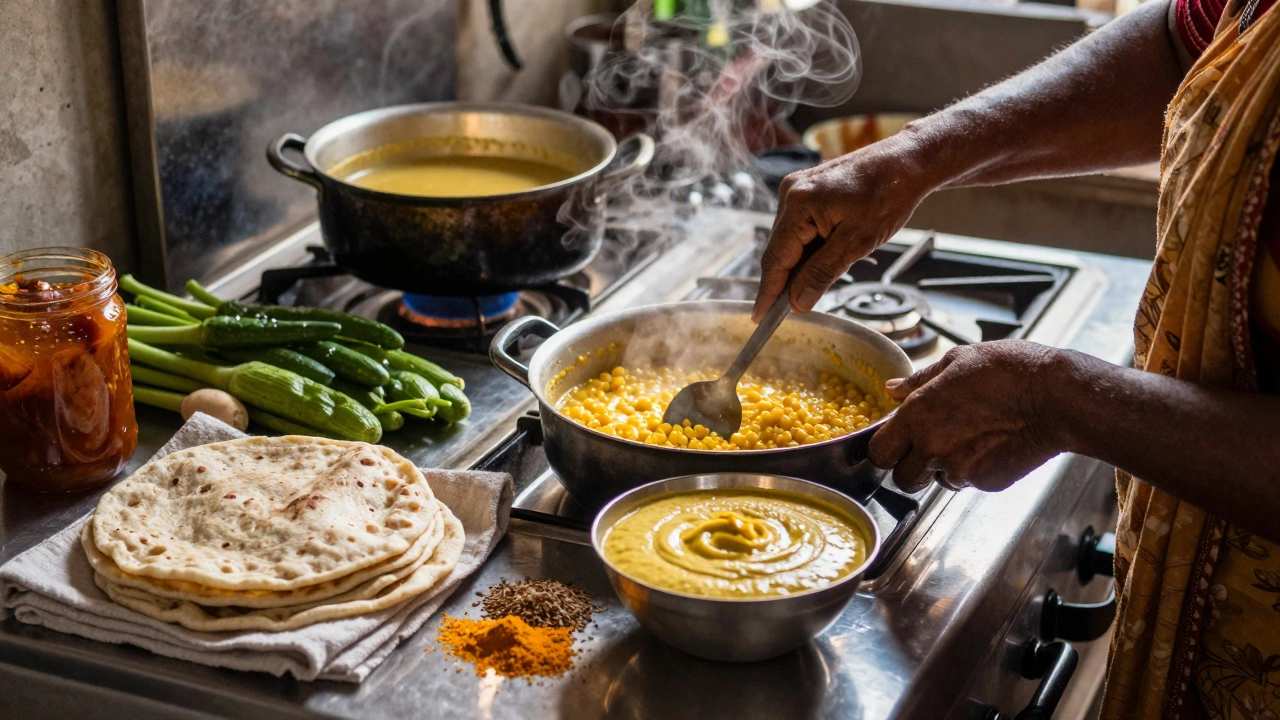
- Swap maida roti for whole wheat, jowar, or bajra roti. These are higher in fiber and digest slower.
- Choose dal over paneer as your main protein. Dal is cheaper, lower in saturated fat, and richer in iron and folate.
- Use mustard, coconut, or olive oil instead of ghee or vanaspati. One tablespoon of ghee adds 120 calories with no fiber.
- Eat fermented foods daily. Idli, dosa, dhokla, and kanji (fermented carrot drink) help your gut microbiome.
- Make vegetables the star. Aim for 3-4 different colored veggies in every meal. Spinach, beetroot, carrots, and bitter gourd are nutrient powerhouses.
And here’s what to cut back on:
- Deep-fried snacks (samosas, pakoras, bhajjis)
- Sweetened dairy desserts (barfi, gulab jamun, kheer)
- White rice as the main carb (swap with brown rice or quinoa)
- Ready-made curry pastes and masalas with added sugar and preservatives
Real People, Real Results
In Mumbai, a 42-year-old teacher named Priya switched from eating white rice and paneer curry every day to brown rice, moong dal, and stir-fried greens. She lost 14 pounds in four months. Her fasting blood sugar dropped from 118 to 89 mg/dL. She didn’t count calories. She just changed the quality of her food.
In Jaipur, a family replaced their daily ghee-laden parathas with jowar roti and dal. Within six weeks, their cholesterol levels improved. The kids stopped craving sweets because their bodies weren’t crashing from sugar spikes.
These aren’t outliers. They’re examples of what happens when you go back to basics. Indian vegetarian food doesn’t need fancy superfoods. It needs better choices.
Why This Diet Works Better Than Western Veganism
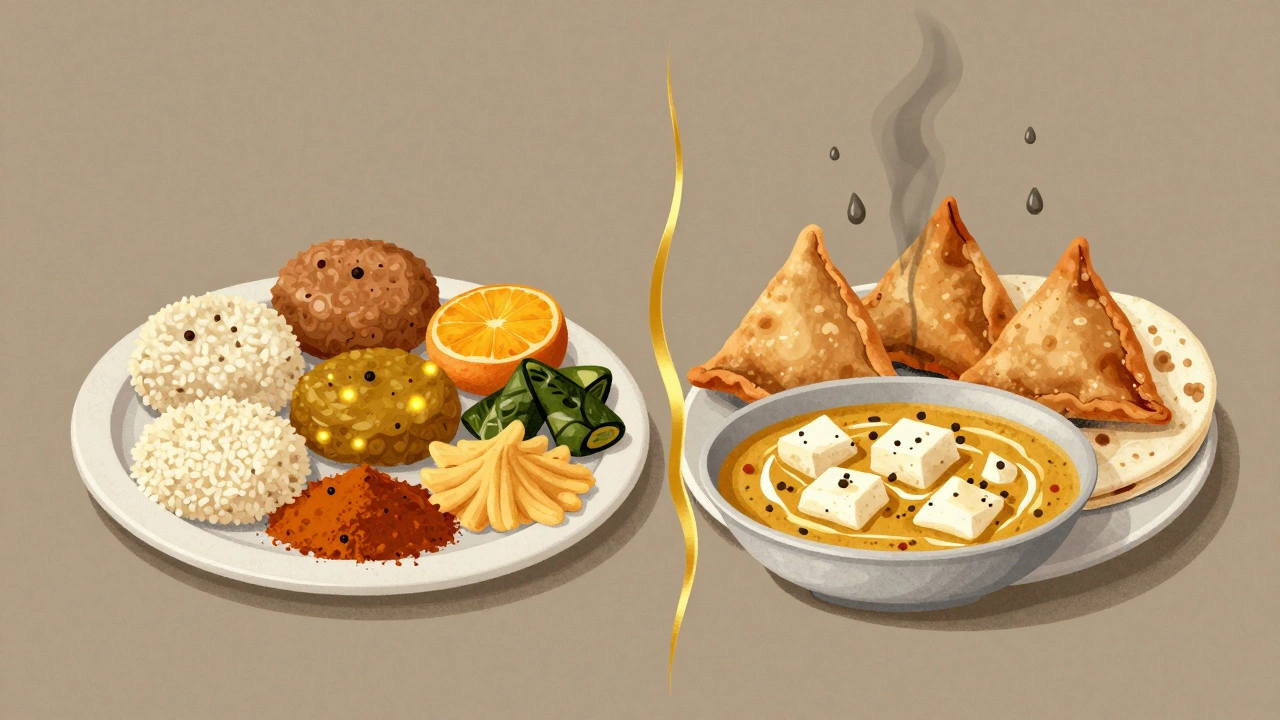
Many people compare Indian vegetarian diets to Western veganism. But they’re not the same. Western vegan diets often rely on processed meat substitutes, soy isolates, and refined carbs. Indian vegetarian diets rely on whole, minimally processed foods.
Indian meals naturally include a balance of carbs, protein, and fat without needing labels. Lentils + rice + vegetables = complete nutrition. No protein powder needed. No fortified plant milk required. The nutrients come from food, not supplements.
Plus, spices aren’t just flavor. They’re functional. Curcumin in turmeric reduces inflammation. Cinnamon helps regulate blood sugar. Black pepper boosts nutrient absorption. These aren’t add-ons-they’re part of the meal’s structure.
Can You Eat Indian Vegetarian Food Long-Term?
Yes-if you avoid the traps. The traditional Indian vegetarian plate is one of the most sustainable, nutrient-dense diets on the planet. But modernization has diluted its power. The key isn’t to abandon Indian food. It’s to reclaim it.
Don’t assume all vegetarian food is healthy. Check the ingredients. Ask how it’s cooked. Choose whole over refined. Favor home-cooked over restaurant. Eat seasonally. Skip the sugar.
Indian vegetarian food isn’t perfect. But when done right, it’s one of the healthiest ways to eat on Earth. It’s not about being vegetarian. It’s about eating well.
Is Indian vegetarian food high in protein?
Yes, if you eat the right foods. Lentils, chickpeas, kidney beans, and soy products like tofu and paneer are rich in protein. A cup of cooked dal gives you about 18 grams. Combined with whole grains like brown rice or millet, you get all essential amino acids. You don’t need meat or supplements.
Does Indian vegetarian food cause weight gain?
Only if you eat too much fried food, refined flour, or sugar. Dishes like samosas, gulab jamun, and white rice roti are calorie-dense and low in fiber. But dal, vegetables, and whole grain roti won’t make you gain weight. Portion control and cooking method matter more than being vegetarian.
Is ghee healthy in Indian vegetarian meals?
In small amounts, yes. Ghee is a source of fat-soluble vitamins and has a high smoke point, making it stable for cooking. But it’s high in saturated fat. One tablespoon adds 120 calories. If you’re eating ghee daily with fried rotis and sweets, it can raise cholesterol. Use it sparingly-1 teaspoon per meal is enough.
Are Indian vegetarian diets low in iron?
No, not if you eat the right foods. Spinach, lentils, jowar, and pumpkin seeds are rich in iron. The problem is absorption. Phytic acid in grains and legumes can block iron uptake. But fermentation (like in idli or dosa) and pairing with vitamin C (like lemon juice or tomatoes) boosts absorption. Avoid drinking tea with meals-it inhibits iron absorption.
Can I eat Indian vegetarian food if I have diabetes?
Absolutely-but you need to make smart swaps. Skip white rice, maida roti, and sugary sweets. Choose brown rice, jowar roti, and dal. Eat more bitter gourd, fenugreek, and beans-they help regulate blood sugar. Avoid frying. Use minimal oil. Monitor portions. Many diabetics in India manage well on traditional vegetarian diets when they avoid processed carbs and sugar.
Next Steps: How to Make Your Indian Vegetarian Diet Healthier
Start small. Pick one change this week:
- Replace one white roti with a whole grain roti.
- Add a serving of dal to every lunch.
- Swap one fried snack for roasted chana or a fruit.
- Use lemon juice or tomato in your dal to help absorb iron.
- Drink water instead of sweet lassi or sugary tea.
Track how you feel. More energy? Fewer cravings? Better digestion? Those are your signs you’re on the right path. You don’t need to overhaul your diet overnight. Just make one better choice at a time.