What is the Official Sweet of India? A Guide to Gajar Ka Halwa, Gulab Jamun & More
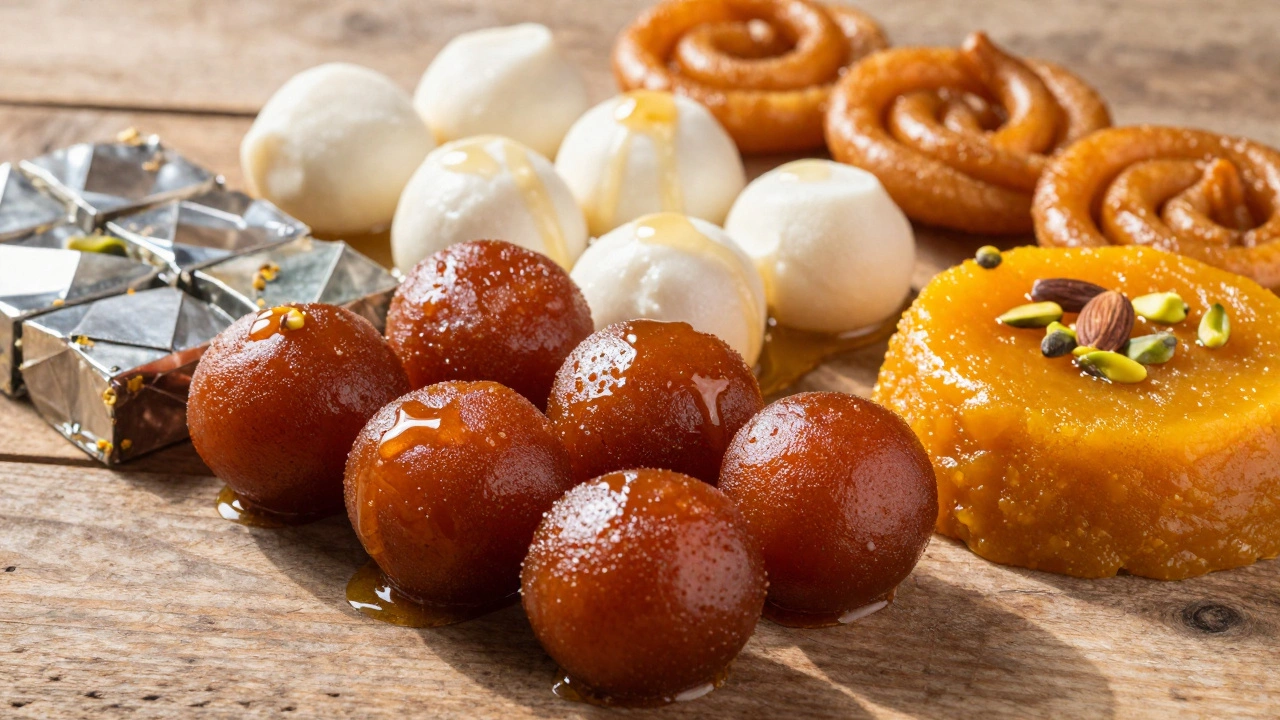 May, 29 2026
Find Your Perfect Indian Sweet
Not sure which Indian sweet to choose? Answer these quick questions to find your perfect match!
1. What's the occasion?
Winter Festival
Diwali, Makar SankrantiWedding/Celebration
Large gatheringsGift Giving
Premium presentationSummer Refreshment
Light & coolingQuick Snack
Tea-time treatAny Time
Just craving sweetsYour Perfect Match! 🎉
Gajar Ka Halwa
Why This Sweet?
Based on your preferences, this is your ideal Indian sweet!
There is a common misconception that India has one single "official" sweet, much like how some countries have an official flower or bird. The reality is quite different. India does not have a legally designated national dessert. Instead, it has a vast landscape of regional specialties, each claiming pride in its own state. If you are looking for the most iconic representative of Indian confectionery, the answer depends on whether you mean historical significance, global popularity, or seasonal tradition.
For many, Gulab Jamun stands as the unofficial king of Indian sweets. It is the first thing people think of when they hear "Indian dessert." However, if we look at cultural depth and widespread household preparation, Gajar Ka Halwa (Carrot Pudding) from Rajasthan often takes the crown, especially during winter. In this guide, we will break down why there is no single official sweet, explore the top contenders, and provide authentic recipes so you can make these treats yourself.
The Myth of a Single National Sweet
India is a subcontinent with incredible diversity in climate, culture, and ingredients. What works as a staple sweet in the humid south might be too heavy for the dry north. Because of this, the concept of a "national sweet" is more of a cultural conversation than a legal fact. There is no government decree naming a specific dessert as the official symbol of the nation's culinary heritage.
Instead, we have regional champions. Each state has a signature dish that represents its identity:
- Rajasthan: Known for Ghevar, a disc-shaped honeycomb sweet soaked in sugar syrup, traditionally prepared during Teej and Diwali.
- Kerala: Famous for Payasam (or Pradhaman), a rich pudding made with rice, vermicelli, or lentils, cooked in coconut milk and jaggery.
- Bengal: Home to Rosogolla (Rasgulla), soft spongy balls of chenna (cottage cheese) soaked in light sugar syrup.
- Punjab: Celebrated for Jalebi, crispy spirals fried in ghee and dipped in saffron-flavored syrup.
This diversity means that asking for "the" official sweet is like asking for the official color of India. While the flag has three colors, the cuisine has thousands. Understanding this helps you appreciate the context behind every bite.
Top Contender: Gulab Jamun - The Global Ambassador
If you had to pick one sweet that represents India to the rest of the world, it would almost certainly be Gulab Jamun. These deep-fried dough balls, soaked in rose-water-scented sugar syrup, are found in Indian restaurants from London to New York. Their popularity stems from their universal appeal: they are soft, sweet, and visually appealing.
The history of Gulab Jamun traces back to the Mughal era, evolving from earlier Persian influences. The name itself gives a clue: "Gulab" means rose water, and "Jamun" refers to the Java plum, describing the dark brown color of the fried balls. Unlike many other sweets that require complex layering, Gulab Jamun relies on technique-specifically, the consistency of the dough and the temperature of the oil.
Why do people consider it the "official" favorite?
- Ubiquity: It is served at weddings, festivals, and casual gatherings across all regions of India.
- Simplicity: The ingredients are basic-milk solids, flour, sugar, and ghee.
- Nostalgia: For millions of Indians, the taste triggers childhood memories of school functions and family celebrations.
However, making perfect Gulab Jamun at home can be tricky. The dough must not be over-kneaded, or the sweets will become hard instead of spongy. This difficulty often leads people to buy them from shops, reinforcing their status as a commercial staple rather than just a home-cooked meal.
The Seasonal King: Gajar Ka Halwa
While Gulab Jamun is popular year-round, Gajar Ka Halwa holds a special place in Indian hearts, particularly during the winter months. Originating in the arid plains of Rajasthan, this carrot pudding was born out of necessity. Farmers needed a way to use the abundant local carrots, which were otherwise difficult to store or sell in bulk. By slow-cooking them with milk, ghee, and khoya (reduced milk solids), they created a nutrient-dense treat that provided energy during cold winters.
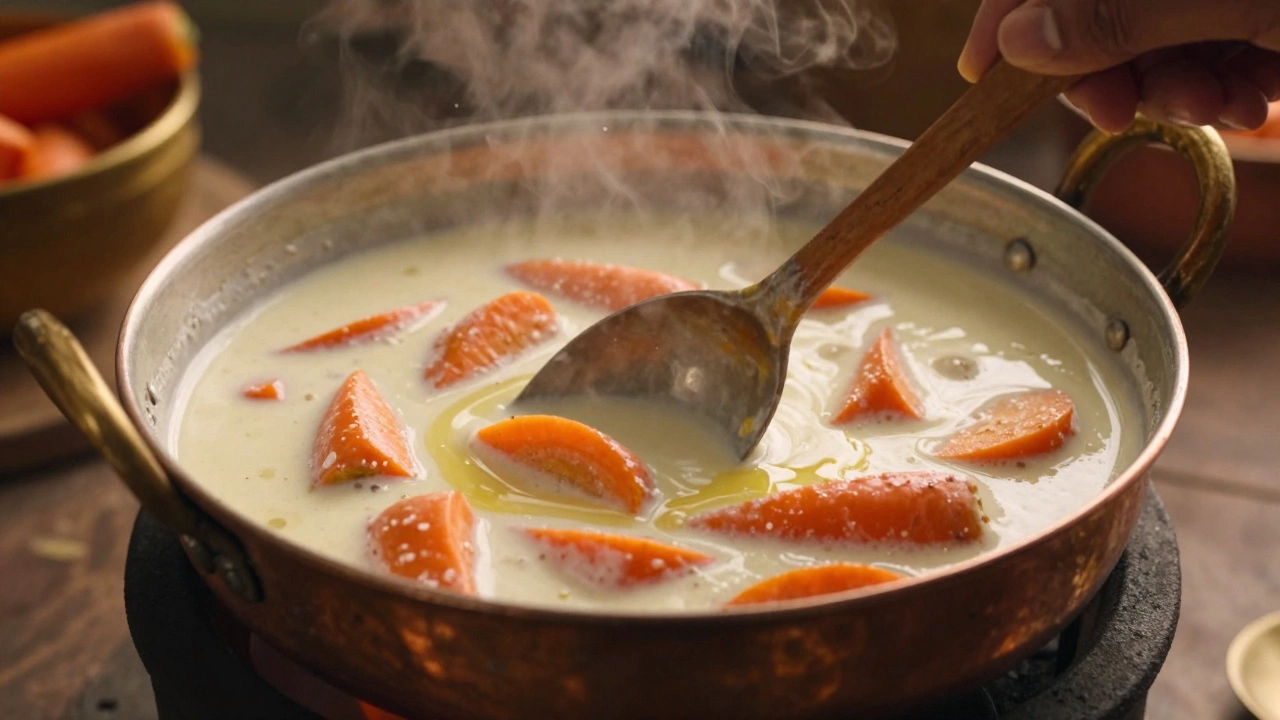
Today, Gajar Ka Halwa is synonymous with winter in North India. As soon as the temperature drops, households begin buying fresh, orange-colored carrots. The process is labor-intensive but rewarding. The carrots are grated, then simmered in full-fat milk until the liquid evaporates. This step alone can take two hours. Once the carrots are tender, ghee, sugar, and dry fruits like almonds and pistachios are added.
What makes Gajar Ka Halwa unique is its texture. It should be moist yet thick, with a caramelized flavor profile that comes from the reduction of milk sugars. Unlike Gulab Jamun, which is purely indulgent, Gajar Ka Halwa is often viewed as slightly healthier due to the presence of vegetables and dairy proteins. Many families consider this the true "heartwarming" sweet of India.
Other Regional Powerhouses
To truly understand Indian sweets, you must look beyond the big two. Here are three other contenders that deserve recognition:
1. Kaju Katli (Cashew Fudge)
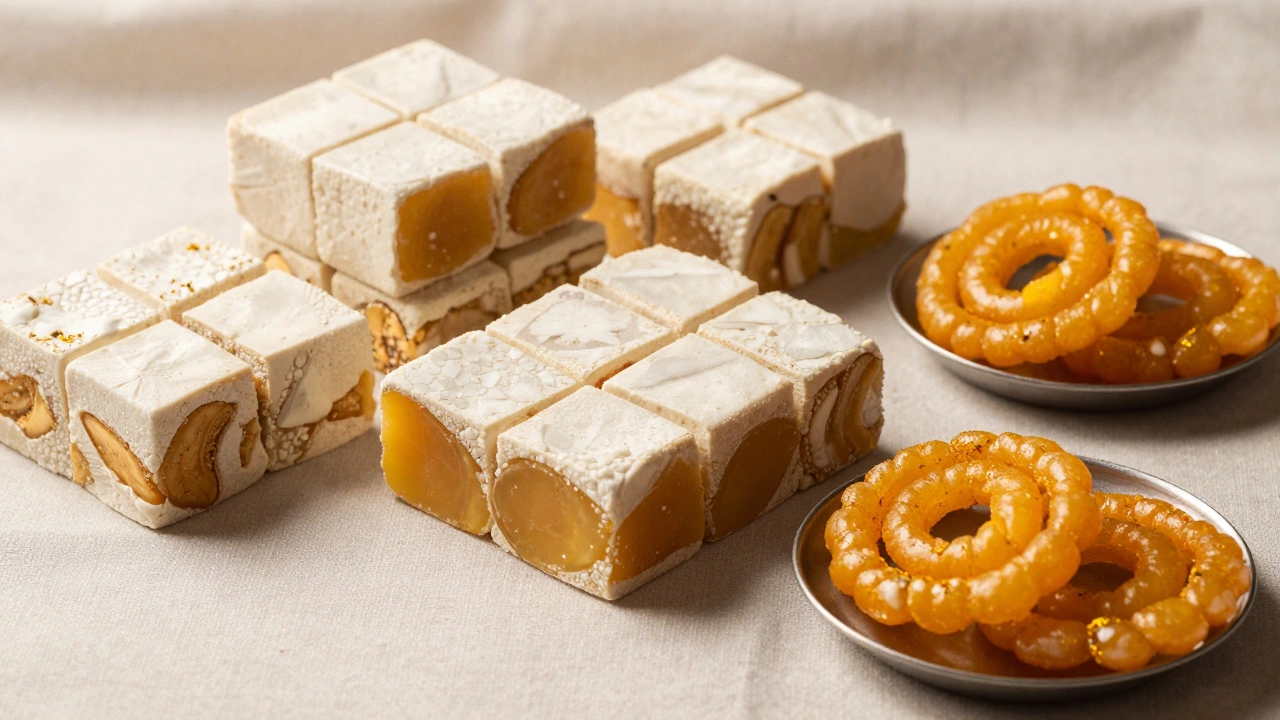
Hailing from Hyderabad, Kaju Katli is a diamond-shaped fudge made primarily from cashew paste and sugar. It is refined, elegant, and less sticky than other sweets. During Diwali, boxes of Kaju Katli are exchanged as gifts because they have a long shelf life and a premium feel. It represents sophistication in Indian confectionery.
2. Rasgulla
As mentioned earlier, Rasgulla is the pride of West Bengal and Odisha. Unlike the dense Gulab Jamun, Rasgullas are airy and springy. They are made by curdling milk to create chenna, which is then kneaded into a smooth dough, rolled into balls, and boiled in sugar syrup. The boiling process causes the balls to expand, creating a sponge-like interior that absorbs the syrup. It is a testament to the mastery of dairy processing in Eastern India.
3. Mysore Pak
From Karnataka, Mysore Pak is a buttery delight made from gram flour (besan), sugar, and copious amounts of ghee. It melts in your mouth and is known for its richness. Historically, it was invented by a cook in the royal kitchen of Mysore who accidentally added too much ghee, resulting in a porous, fluffy texture that the Maharaja loved.
How to Choose the Right Sweet for Your Occasion
Since there is no single official sweet, choosing the right one depends on the context. Here is a quick guide to help you decide:
| Occasion / Context | Recommended Sweet | Reason |
|---|---|---|
| Winter Festivals (Diwali, Makar Sankranti) | Gajar Ka Halwa | Seasonal ingredient; warming properties |
| Weddings & Large Gatherings | Gulab Jamun | Easily scalable; universally liked |
| Gift Giving | Kaju Katli | Premium packaging; long shelf life |
| Summer Refreshment | Rasgulla | Light texture; high water content |
| Quick Snack | Jalebi | Crispy; best eaten hot |
Simple Recipe: Authentic Gajar Ka Halwa
If you want to try making the "winter official" sweet at home, here is a simplified version of the traditional Rajasthani recipe. This method balances authenticity with ease for home cooks.
Ingredients:
- 4 large carrots, peeled and finely grated
- 1 liter full-fat milk
- 1/2 cup sugar (adjust to taste)
- 2 tablespoons ghee
- 1/4 cup chopped almonds and pistachios
- 1/4 teaspoon cardamom powder
- 1 tablespoon raisins (optional)
Instructions:
- Reduce the Milk: Pour the milk into a heavy-bottomed pan. Bring it to a boil, then lower the heat. Let it simmer until the volume reduces by half. This step adds richness and body to the final dish.
- Cook the Carrots: Add the grated carrots to the reduced milk. Cook on medium-low heat, stirring occasionally to prevent sticking. This process takes about 45-60 minutes. You want the carrots to become completely tender and absorb most of the milk.
- Add Fat and Sugar: Once the mixture is thick and the oil starts separating from the sides, add the ghee and sugar. Stir well.
- Fry the Dry Fruits: In a separate small pan, fry the raisins in a little ghee until they puff up. Add them to the halwa along with the chopped nuts.
- Finish with Aroma: Sprinkle cardamom powder and mix thoroughly. Turn off the heat. Let it cool slightly before serving. It tastes even better the next day as the flavors meld together.
This recipe highlights the importance of patience in Indian cooking. Rushing the milk reduction step will result in a watery halwa. Taking your time ensures that creamy, dense texture that defines the dish.
Health Considerations in Traditional Sweets
Traditional Indian sweets are undeniably calorie-dense. They rely heavily on ghee, sugar, and full-fat dairy. For those watching their sugar intake or weight, moderation is key. However, many modern adaptations exist. For instance, using jaggery instead of white sugar provides trace minerals like iron and magnesium. Using stevia or monk fruit can reduce calories, though it may alter the texture slightly.
Furthermore, many sweets contain nuts and seeds, which offer healthy fats and protein. A small portion of Kaju Katli, for example, provides energy from cashews. The key is portion control. In Indian culture, sweets are meant to be shared, not consumed in large quantities by one person. Enjoying a small piece after a meal aids digestion and satisfies the craving without overwhelming the system.
Conclusion: Embracing the Diversity
So, what is the official sweet of India? The answer is that there isn't one-and that is the beauty of it. Whether you prefer the sponginess of Rasgulla, the richness of Gajar Ka Halwa, or the classic charm of Gulab Jamun, each sweet tells a story of its region, its history, and its people. Instead of searching for a single titleholder, embrace the variety. Try a new regional specialty each festival, and let your palate decide which one feels like home to you.
Does India have a legally declared national sweet?
No, India does not have a legally declared national sweet. The country celebrates a wide variety of regional desserts, with no single dish holding official status nationwide.
Which Indian sweet is most popular globally?
Gulab Jamun is widely considered the most popular Indian sweet globally. It is available in Indian restaurants worldwide and is recognized for its distinct shape and rose-syrup flavor.
What is the traditional sweet of Rajasthan?
Gajar Ka Halwa (Carrot Pudding) is the most famous traditional sweet from Rajasthan, especially during winter. Ghevar is another iconic festive sweet from the region.
Is Rasgulla originally from Bengal or Odisha?
The origin of Rasgulla is a subject of debate between West Bengal and Odisha. Both states claim to have invented the sweet, and variations exist in both regions regarding texture and size.
Can I make Gajar Ka Halwa without reducing milk?
You can skip reducing milk for a quicker version, but the texture will be thinner and less rich. Traditional Gajar Ka Halwa relies on reduced milk for its creamy, dense consistency.